


Human relationships are very complex and this fact is not new. As I am exposed to more and more people, I realize the hundred kinds of relationships I can have with people. The past year has taught me so much that it is taking me forever to process all of it. The biggest lesson that I have learned is conflict management. I use the word management because resolution is not always the solution. Sometimes letting a problem solve by itself is the solution because trying to pick a side can worsen the situation.
Life is inching ahead,
and I am running behind.
Is my mind in turmoil,
or is there turmoil in my mind?
And it is not just human relationships. This is about life in general. I also realize that I am neither the first nor the only person in such turmoil about most things. Everyone goes through such periods of confusion at all stages of life. I am having a conflict of interest with my own mind, let alone with other people. And the moment I discover some new rules or facts about something in particular that directly affects me, I launch into a low-key panic. But at this point, I have figured out that this is the way I solve my issues, so I welcome this controlled panic with open arms.
Simplicity of the past vs minimalism of the present
Simplicity has several definitions, including minimalism. But minimalism has its own downfalls.
I honestly remember a different time when colors were more colorful
distinctly different from today when minimalism is so powerful.
Times were simpler when respect was earned,
which today is simply yearned.
Squished between real-time and archives,
it feels I have led two different lives.

I lived in a childhood of simplicity, but one that seemed to have colors. We spoke, but without agenda. We played, but without malice in the heart. We pranked, but without hurting the other person. We spooked, but without scaring the other person. The ways of getting things done might have been slower, but everything seemed to have meaning. We worked with a goal, which today doesn’t feel as satisfactory even when it’s achieved. Happiness felt more genuine and ill-intent had a face. Now it is faceless and exists almost everywhere. Instead of spreading wings, it seems more like learning how to protect them from getting chopped down. The present situation in the world appears to give a lot of opportunities, but it is still the same world as it was earlier. It is still the one which will pull you down when things don’t go according to the wants of the majority. And this is what I mean by ill-intent. Learning to live in this world is becoming tougher with the boom of the internet, where such elements with ill-intent are now connected and have found one voice, who were earlier very scattered.
When faced with a problem like this, it feels overwhelming but since it helps me quickly list out the pros and cons, I welcome this low-key panic with open arms.
Do we ever stop being children?
What is the concept of being a child? Does adulthood give you superpowers that you did not have as a child? Technically, we are all children. And we never grow up. We learn to live different aspects of life as we gain more and more experiences. Privilege, entitlement, and advantage are words that are being thrown around these days at every instance of achievement for everyone. Is entitlement really that simple?

Being 18 doesn’t mean that a switch has flicked and the person suddenly knows how to deal with everything. But that doesn’t mean you cannot learn earlier. Having knowledge and skill has got nothing to do with age. It has to do with the availability and accessibility of resources, and the intent to learn without bias. This pace of learning differs so much from person to person. experiences are subjective and must be used as per expertise. No job is big or small, but neither are two different jobs equal. Each job or work has its own place in society and must be seen as such. The differences in society are what make it function flawlessly.
Other than differences in experiences, the pace of learning is different for all people because each person’s psyche, learning styles, and evaluation of problems are different. But in your learning, it is important to remember that the world doesn’t revolve around you.
While dealing with your problems, make sure they do not affect another person in any way, whether it is the workplace, your home, or school.
Solving your own problems becomes tricky when it involves your family because it requires honest communication and a will for improvement. Building a relationship (romantic, siblings, cousins, in-laws, anything at all) requires understanding from both sides, a belief in the other person’s way of working, and respecting their choice. Simple communication, no ill-intent, and putting ego aside are the only requirements that one really needs. When faced with such a situation, I obviously go into a panic mode mentally. But it helps me think in the other person’s shoes and evaluate what could hurt them. So, I am able to formulate my response in the best way possible. Since it helps me evaluate social situations, I welcome this low-key panic with open arms.
Evaluating skills
If someone has struggled a lot in life, he is worthy of praise. But if that struggle is giving him success in a field that he is not skilled in, he is wasting his own capabilities and taking the place of a more skilled person who could have done the job better. Such ideologies are mostly applicable to fields of art, where the success of a project is dependent on the talent of a person. For a job in science, talent translates to competence and intelligence. In commerce or administration, it is a much more diverse field that has something for most people, but the main requirement is to have analytical skills to solve people’s problems subjectively in all respects. And then there are skill-based jobs, which require training, and unskilled jobs, which require physical fitness and strength. So each job that exists in the world requires some skill, training, or some physical or mental core competency. None of these are small or big, but neither of them is equal to the other. Of course, people can have multiple skills but the point is to be more skilled in one particular area that you make a place for yourself in the workplace.
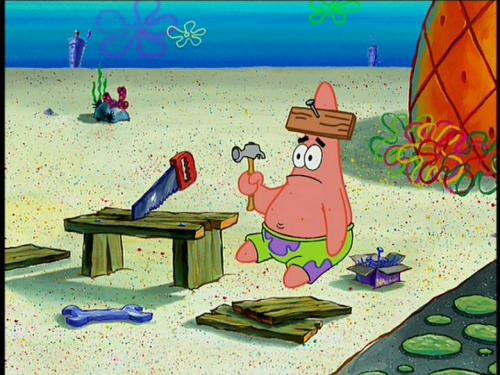
I meet so many people everyday and each person carries their own skill set. Just because I am able to do a few things better than them, it doesn’t automatically make me better than them. There are so many other skills where I would fail miserably, while they might pass with flying colors. While meeting a new person, I go into a low-key panic wondering whether I can match up to them or not. But since this panic helps me evaluate the other person’s skill-set before I show mine, I am able to tailor my responses to make the interaction as fruitful for both as possible. And so, I welcome this low-key panic with open arms.
Channeling this low-key panic
When I talk about using my low-key panic, I mean channeling it in the right direction. This is very different from acting in panic. While panic is my response to most situations, I am learning to channel it in ways that will give me go-to actions instead of mindless chaos. This controlled panic can be likened to a heightened state of alertness that sharpens my focus and accelerates my problem-solving abilities. It’s like turning up the volume on my brain’s capacity to analyze and react. Instead of letting the panic lead to stress or a feeling of helplessness, I harness it to prioritize tasks, outline steps to address issues, and foresee potential obstacles. Moreover, this low-key panic serves as a catalyst for creativity. In moments of stress, my mind becomes more agile, often coming up with innovative solutions that I might not consider in a calmer state. It’s as if the pressure of the moment compels me to think outside the box, pushing boundaries and exploring unconventional ideas.
It’s important to note that this approach requires a balance. While the initial panic can be beneficial, it is essential to remain grounded and not let it spiral into overwhelming anxiety. As humans, we are also animals, and just as we train animals to be their best, isn’t it more important that we should first train ourselves to be the best versions of ourselves?
Impacting Society by Supporting Your Family

Each human on this planet is a child learning different things at different stages in life. Instead of evaluating who is doing what around you, start making a place for yourself in this functioning society so that your efforts lead to progress in society while you are living on this planet. If you choose a comfortable life for yourself, then do it with confidence because happy people make much better contributions than stressed ones. After all, a mediocre life is also a type of valid lifestyle (Unpopular Opinion: Mediocrity is acceptable).
When I say making a difference in society, you must be aware that society includes your family.
If you are doing enough to make life better for them, you are already contributing enough to society because as more and more people keep their families satisfied, there will be multiple happy families in this world. This would automatically lead to a better society. Making a place for yourself also involves evaluating whether you are knowledgeable enough to provide an opinion on something. If you are still learning elementary working about something, how can you expect to offer an “expert” opinion on it? In fact, even I get several ideas throughout the day, every day. But not all the ideas are worthy of an article because I may not have enough knowledge in that area. I reject many of my articles before publishing them because they don’t offer a complete picture. And I would rather not add to the already existing misinformation or disinformation with my incomplete expertise unless I can offer conclusive reasons and facts from reliable sources (Do I have the privilege of asking questions?).
In conclusion, while this controlled panic works for me, it may or may not work for you. It is time to find your ally in yourself, rather than look for it in other people.
TL;DR?
You are not the first person facing problems in life, neither am I the last person. But figuring it out for ourselves is the one thing we are meant to do. Navigating life’s complexities requires embracing and channeling your internal ally as a tool for focus and problem-solving, which for me is low-key panic. Reflecting on past simplicity and present minimalism, it’s essential to balance growth, empathy, and respect for diverse talents. Supporting our families leads to a happier society, where informed opinions prevent misinformation. By training ourselves to be the best versions, we make life easier for ourselves as well as for those around and affected by us.
Remember: Learn to control your mind before it learns to control itself. Point to ponder?

Be Priyafied!
Discover more from Priyafied
Subscribe to get the latest posts sent to your email.

 Priyafied
Nice observations 💯, excellently articulated article 👏👏👍🙏.
LikeLiked by 1 person