


“Men are judged by their potential, while women are judged on their past performance”. I didn’t say this, but is there truth to this? What do you think? Read the original research here: Overlooked Leadership Potential: The Preference for Leadership Potential in Job Candidates Who Are Men vs. Women (Frontiers in Psychology) Men and women approach their jobs differently. This is a known point, but some tendencies seep into the working styles. For example, there is a general difference even in the email styles of men and women. While men tend to be upfront about their demands, women make a conscious effort to ensure that their demands don’t cause too much trouble. Trying to work twice as hard just to prove themselves equally competent as a man on the same job is not news to most women.
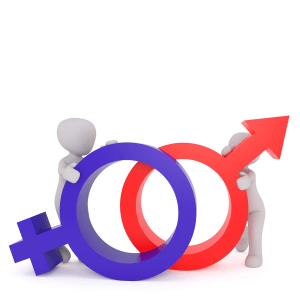
Women in STEM
Specifically for women in STEM (Science Technology Engineering Mathematics), it is a battle we’re still fighting. Among many mainstream issues like opportunities to study and work, freedom to pursue the field of choice, and working the job of choice after marriage, another important issue that affects the longevity of most women’s careers in STEM is having to change their place of work based on the husband’s place of work. In fact, this issue is not limited to STEM fields. But specifically in STEM, women’s voices need to be heard and their opinions should be taken into consideration more than it is currently being done. This is directly related to quality of life and safety. For example, crash test dummies that are used to predict the injuries one can sustain in a car crash are based on an average “male”. In a study conducted by the University of Virginia in 2019, it was found that women had a 73% higher likelihood of sustaining injuries in car accidents compared to men. This is because women’s bodies are different from a man’s for obvious reasons and perform differently in a crash. For example, typically, women have weaker neck muscles, which results in greater flexibility and more movement when compared to a male dummy. This becomes evident when conducting identical crash tests at the same speed and acceleration. While this problem of female representation in crash testing was brought up during the late 1900s, they simply used a smaller-sized male dummy to represent women, which obviously doesn’t solve the problem. A significant advancement in car crash testing may have occurred through the efforts of a team of researchers, spearheaded by Dr Astrid Linder, at the Swedish National Road and Transport Research Institute in Linköping, Sweden. In 2022, the team introduced a novel female car crash test dummy, marking a noteworthy development in crash testing technology. Unsurprisingly, Dr Astrid Linder is a woman, hence proving my point about why female representation is very important in STEM fields specifically.
Women in medicine research

In the realm of medicine and surgery, the significance of female researchers cannot be overstated, particularly when it comes to ensuring accurate and unbiased diagnoses. The impact of gender bias in healthcare is a pressing issue that has gained increased attention in recent years. Studies have shown that certain medical conditions manifest differently in men and women, and misdiagnoses can occur when clinical research and diagnostic criteria primarily reflect the experiences of one gender. Having a diverse team of researchers, including women, is essential for developing a comprehensive understanding of various health conditions. Women’s unique physiological differences, hormonal fluctuations, and distinct symptom presentations must be thoroughly studied and considered in medical research. This not only contributes to a more nuanced understanding of diseases but also helps in the development of personalized and effective treatment plans.
One common example of misdiagnosis involves the presentation of heart attack symptoms in women. Traditionally, the symptoms of a heart attack have been based on the male experience, leading to potential misinterpretation and delayed diagnosis in women. While chest pain is a classic symptom associated with heart attacks, women may experience subtler or atypical symptoms that differ from the stereotypical presentation. For instance, women might report symptoms such as nausea, shortness of breath, fatigue, and pain in the jaw or back rather than the typical crushing chest pain. In a misdiagnosis scenario, a woman experiencing these atypical symptoms might not be immediately identified as a candidate for a heart attack. The medical team, possibly influenced by ingrained stereotypes or a lack of awareness about gender-specific symptoms, might attribute the symptoms to other conditions, such as indigestion or stress. As a result, the woman may not receive the prompt cardiac intervention needed during the critical early stages of a heart attack. Delayed diagnosis and treatment can lead to increased damage to the heart muscle and a higher risk of complications. By championing the contributions of female researchers, we pave the way for a medical landscape that is more attuned to the diverse needs of all patients, ensuring that diagnoses are accurate, treatments are effective, and the quality of healthcare is truly inclusive.
Importance of having a career
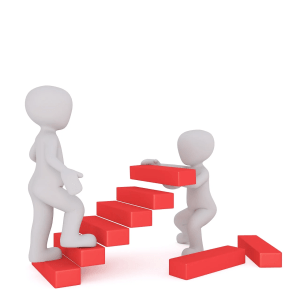
Some critics argue that women do not face discrimination but are simply less interested in certain fields than men, and hence the number of women may seem less in certain professions. However, interest is cultivated and can be shaped for a child based on the atmosphere and biases the child is raised with. They also say that enforcing policies that mandate the hiring of a woman for a position when pitted against a man with the same credentials can introduce a quota system. However, at this point, we just want to ensure equality of opportunities. Every human deserves to be presented with the same access to opportunity irrespective of sex without having to work twice as hard to prove our worth constantly.
Women are often not mandated to have a career. There are two ways to look at this situation:
-> A woman having a career is a bonus.
-> A woman will not be judged if she wants to sit at home.
The first sentence paints women’s careers as unimportant. The second sentence appears to empower women in the sense of giving them freedom from judgement. But both of them imply clearly that: ‘If she works, then it’s good for her but she doesn’t really have to do it.’ However, is this what we call equality of opportunities? I understand that over the last couple of centuries, women’s roles were often household-related. And the dynamics might have been different before that. At this stage, we must look at what lies ahead, and understand that the world is a dynamic place where roles change depending on the demand of the situation. So, a good future lies in believing that one cannot “allow” another to have basic rights and freedom. A good relationship is like sand – it will flourish if you let it sit and breathe in your palm, but it will fall out the tighter you try to hold it.

In the current world, the situation is getting better but very slowly. In my career, I have not faced direct discrimination based on the fact that I am a woman. I would credit this to supportive parents, teachers, professors, and friends in my life. But that doesn’t mean I have never faced troubles in this regard. For example, when I joined my PhD position, I discovered that I was contending for this position against a man with probably similar credentials and because of the policy mandated by the Equal Opportunities Cell of the university that the woman must be hired for a given position if the qualifications are similar for the contenders of the position, I was hired. Although it was never said to me, I still made it a point to work extensively hard so that it doesn’t even occur to my supervisor that he had to hire me out of compulsion instead of choice. However, it took me a long time to figure out that I am here and doing well at my job because I am smart and worthy. And the day I started respecting my own intelligence, I flourished more than ever before with a burden-free mind. Again the credit for this realization goes to my family and friends who never once doubted my intelligence and always had more faith in my capabilities than I did myself. Based on my experience, I can say that pushing boundaries has to be an individual decision, but getting the opportunity to do so is a collective decision by the society we live and work in. And, society is made by us, so let us take a conscious decision not to stand in other people’s way with stilts of judgement and prejudice. Raise your daughters in an atmosphere that paints STEM subjects as equally lucrative as any other field, support their retention in STEM majors at the university level, and don’t ask them to switch jobs if lab work requires uneven working hours.
Small efforts can change the course of humanity by making women an integral part of conversations at all decision-making tables of the world. What do you think?
Discover more from Priyafied
Subscribe to get the latest posts sent to your email.

 Priyafied
Perfect 👍🙏
LikeLiked by 1 person