


What if time could return? No, I am not talking about time travel or relativity. Have you ever felt in a situation or a location that this has happened before or you have been there despite the fact that you have no logical basis for having such a memory? This is Déjà vu. Everyone has heard of it but have you ever tried to know why it happens?
Déjà vu is a feeling that everyone has had at least once in their lifetime. This term has been borrowed from French, and it literally means “already seen”. It is called promnesia in scientific terms. Over decades of research, different interpretations have been given for this phenomenon. It has been associated with memory, decision making, psychology, past life regression, and even paranormal phenomena such as out-of-body experiences (OBE), channeling, and astral projection. However, it is obvious that not all of these explanations are true. Some may be true. Let’s see what all we have.
A small note before we get into the analysis of Déjà vu: I refrain from going into the details of various concepts used, in particular, related to the question of whether they are authentic and possible. This conversation deserves an article of itself and is outside the scope of today’s article.

Psychological effects
Déjà vu has been associated with some psychological phenomena like out-of-body experiences, channeling, and even psychokinesis.
Out-of-body experiences or OBEs have been studied for decades as part of psychology. However, in recent times it has captured the interest of neuroscientists. It is as its name suggests – a feeling that the mind and body are separate, and that you are interacting with the world from a point separate from your body. Although it has historically been seen skeptically, it is now being taken more seriously. OBEs can be spontaneous or induced. Spontaneous OBE can be during sleep, after extreme physical exertion, or even Near-Death Experiences (NDEs). OBEs can also be induced by chemicals, sensory deprivation or overload, and even Astral Projection, which is a kind of voluntary OBE. Channeling is not very different and involves channeling your consciousness to a point outside of your body. Psychokinesis is also called telekinesis. It is the ability to control or influence a physical system without interacting with it physically yourself.
It is important to note again that each of these concepts stands on its own. While there are no unbiased scientific studies, there have been no disproving scientific studies as well. And it is very important to keep your mind open to all ideas until disproved. But today we are looking at them only with the intention of detangling the concept of Déjà vu. If you would like to read more on these concepts, click here to get a head start.
But can any of these induce a feeling of Déjà vu? The only relation we can draw between these concepts and Déjà vu is that your OBE (whether spontaneous, induced, or voluntary), channeling or, psychokinesis has given you new information which your conscious knowledge is unaware of, and hence is unable to place the sense of familiarity. However, this does not really add up in terms of logic. This is because even if we do agree to the aspect that you gained new information via any of the above methods, all of that is definitely stored in your memory since you are channeling your ‘conscious’ mind. There is no reason for your brain to distinguish based on the source of those memories.
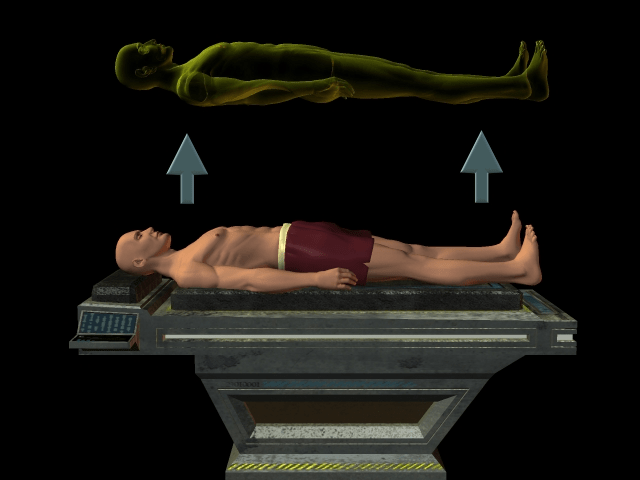
Past life regression is another very strong contender for Déjà vu. It has been explored in popular media like movies a lot of times. Every scenario involving past life or reincarnation is based on the character having a feeling of Déjà vu at some point. But is it that simple? It is very easy to believe this theory at the first glance because Déjà vu is essentially the feeling that something has happened before without having experienced it in our life. But if we look closely, we can pick out some factors to judge the scenario. Déjà vu is a feeling lasting mere seconds. So naturally, you do not have enough time to process it before it goes away. So it is very easy to confuse Déjà vu with forgetfulness. In order to understand whether or not Déjà vu makes sense in past life regression, we have to look at the science behind it.
Memory glitches
Déjà vu has historically had connotations with paranormal and supernatural ideas. So it is natural for scientists to brand it as pseudoscience without much thought. But a change was seen in 2003 with a paper published by psychologist Alan Brown in the journal Psychological Bulletin. Here, he reviewed Déjà vu and provided connections to existing models in cognitive psychology and memory research. His work acted as a catalyst for scientists to take this concept seriously and design experiments to catapult Déjà vu into mainstream science. And it worked! Since then there have been dozens of research works that have proved fruitful in nature. In addition to the fact that Déjà vu happens only for a few seconds, it happens without warnings, making it very hard to study.
Scientists and psychologists have come up with some interesting methods to induce Déjà vu so as to study it. One is hypnotism, used by a team in England in 2006. Followed by this, Anne Cleary, professor of cognitive psychology and memory research at the Colorado State University used a more high-tech idea of Virtual Reality or VR. Her team created scenarios in the Sims video game which were spatially similar to each other despite the actual images being quite different. With the help of these and similar experiments, scientists have covered a long journey with different milestones.
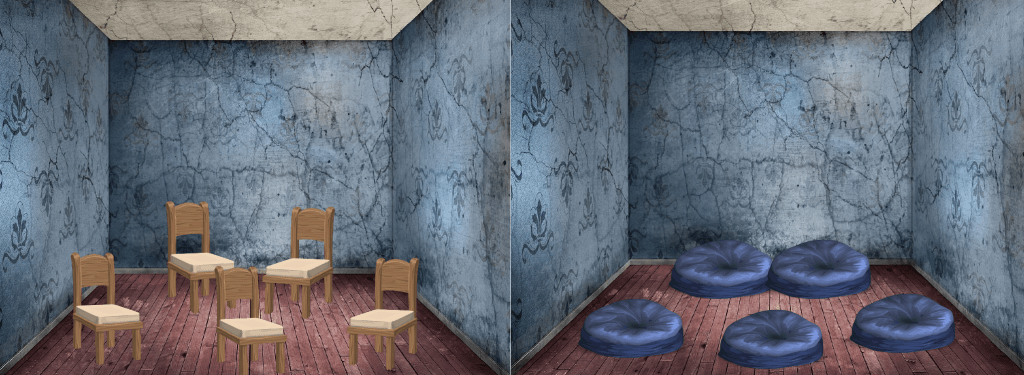
The first major theory was that Déjà vu was associated with glitches in the memory storage. Scientists believed when our mind is able to recognize an existing memory but unable to place its source in the brain. This results in a memory glitch. This source could have been anything, right from completely forgetting a prime memory to a scenario that happened in your peripheral senses. For example, you can forget that you were looking for your lost purse in a particular shop among many other shops. Or, you can go without taking active notice of the shop passing by during your drive, while your brain registered it. And you end up in the same shop for something many days later and have a sudden feeling of Déjà vu.
Apart from this, there were many other theories related to memory that were proposed. Some said that it is a short circuit in the brain, while some others said that the memory goes directly into the long-term memory bank without making a stop in the short-term memory bank. It was also proposed that the area of the brain that tells us something is familiar (Rhinal Cortex) is triggered without any memory to back it up.
But these theories faced a roadblock when neuroscientists conducted fMRI scans of the brains of volunteers with induced Déjà vu. Surprisingly, they found that the areas of the brain associated with memory were not triggered. Rather, the areas associated with decision-making were triggered. We realized that instead of recalling a memory, our brain is doing some kind of conflict resolution. This finding nullifies the role of past life regression, as well as memory glitches in Déjà vu.
Neuroscience
We are finally on the right track to understanding Déjà vu, and it is a much more positive result than expected. As I said before, experiments revealed that during Déjà vu the areas of the brain doing conflict resolution were triggered. What does this mean for us? That our brain is basically doing some background checks to make sure it is running smoothly, just like a computer. For most people, this is actually a good thing that the fact-checking function of your brain is working well and keeps you away from misremembering events. This is the reason why the frequency of Déjà vu reduced with age or increased with fatigue, stress, or travel. As you age, you develop more memory errors but Déjà vu is a problem of the fact-checking part of the brain, which declines with age.
So, Déjà vu is surprisingly a completely healthy phenomenon that happens in your brain because your brain just wants to keep you sane! That being said, if you experience Déjà vu or related feelings like hallucination way too frequently, there may be an underlying issue you need to address. In that case, it is best to calm your mind and consult with a doctor. The ultimate goal of life is to be happy and healthy!
We have talked about Déjà vu in quite some detail today. But there is still a lot we do not know about our brain. Who knows what more surprises it has for us to find?
Stay inspired! Stay Priya-fied!
Discover more from Priyafied
Subscribe to get the latest posts sent to your email.

 Priyafied
Nicely articulated, needs to applaud and appreciate for your fair, accurate and excellent coverage of the subject in a simple manner which can reach to all the readers.
Continue the good work 👍👏
LikeLiked by 1 person
Thank you Appa 🤗
LikeLike