


Have you heard the phrase, “Delulu is not the solulu”? It is a new phrase in use today that means delusion is not the solution. In the digital age, our smartphones often feel like extensions of our hands, constantly feeding us a stream of information, useful as well as useless. Among this deluge, a peculiar habit has emerged—doomscrolling. Ever scrolled through Instagram, Twitter, Threads, Facebook, etc for a long time only to realize that it has been hours, and got a feeling of unproductiveness or tiredness right after that? This is doomscrolling and the tiredness that follows is not the usual one. It is more of a mental block and a feeling of something clouding your brain and thinking abilities. This is immediately followed by disappointment in yourself because you could have spent all this time doing something productive that would have reduced your workload instead of aimlessly browsing. This is now being seen as a form of internet addiction disorder. Anything in excess is bad for us and the internet is no different. By putting ourselves at the receiving end of online engagement, we are purposely putting our mental and by extension, our physical health at risk.
At this point, we all know about this and the information I provide here is not new. However, I want this article to serve as a wake-up call for all those who are still caught up in the cycle of scrolling through memes and short-format videos. While a couple of cat videos or babies doing baby stuff videos will entertain you, it is important to stop them after some time because it is not healthy. It is equivalent to eating sugar or oil. A small amount of fat is necessary for the body, but consume a lot and your body deteriorates. If one is careful about what they put inside their bodies, why not be careful about what goes inside the brain? It might give you a deception of looking cool by not taking care of yourself, but all that goes out of the window when you start having health issues that cause disruption in your daily life. Why wait until that point to get your life in order?
The compulsive need for the internet can have a significant impact on one’s life over prolonged periods. Declining scores in academics for students, loss of sleep, anxiety, personality defects, impact on social life, impaired physical health due to lack of exercise, internet dependency, eye and back strain, increased risk of Carpel Tunnel Syndrome, etc are just the tip of the iceberg.
A related but direct consequence of internet addiction is “Communication Addiction Disorder (CAD)”. This is the situation when one feels the need to be in constant communication with someone, a group of people, or with “subscribers” in the context of the internet. This also comprises some people’s need to constantly have friends in the network to reinforce their ego. While this is commonly seen in teenagers, who grow out of it once they get into the real world, it is now being seen in many adults because most of them seem to be living in their own bubble. It is perfectly understandable to do anything that gets you money to feed yourself and any dependents, but if it comes at the cost of long-term health and sanity of yourself or loved ones, then it may be time to rethink your choice of career.
Coming back to doomscrolling, it is a term that is used particularly in the context of consuming endless “negative” content. It is related to the “mean world syndrome” that came up in the 1970s, which involves a person living in the belief that the world is a much more dangerous place than it actually is, and comes as a result of consuming violent content and letting it affect the perception of reality. Seeing upsetting news makes people seek out more information on that topic, causing a cascading effect that leads to a self-perpetuating cycle. While it may be hardwired biologically into animals to look out for danger and humans being animals are not averse to this behaviour, one forgets that humans also have the capability of being intelligent and tweak behaviours depending on requirements. A reverse scenario of this involves people avoiding negative news and content entirely to cope with the ever-increasing types of crimes in the world. But this just makes one blind to the dangers and isn’t a solution to the problem. Remember, delulu is not the solulu?
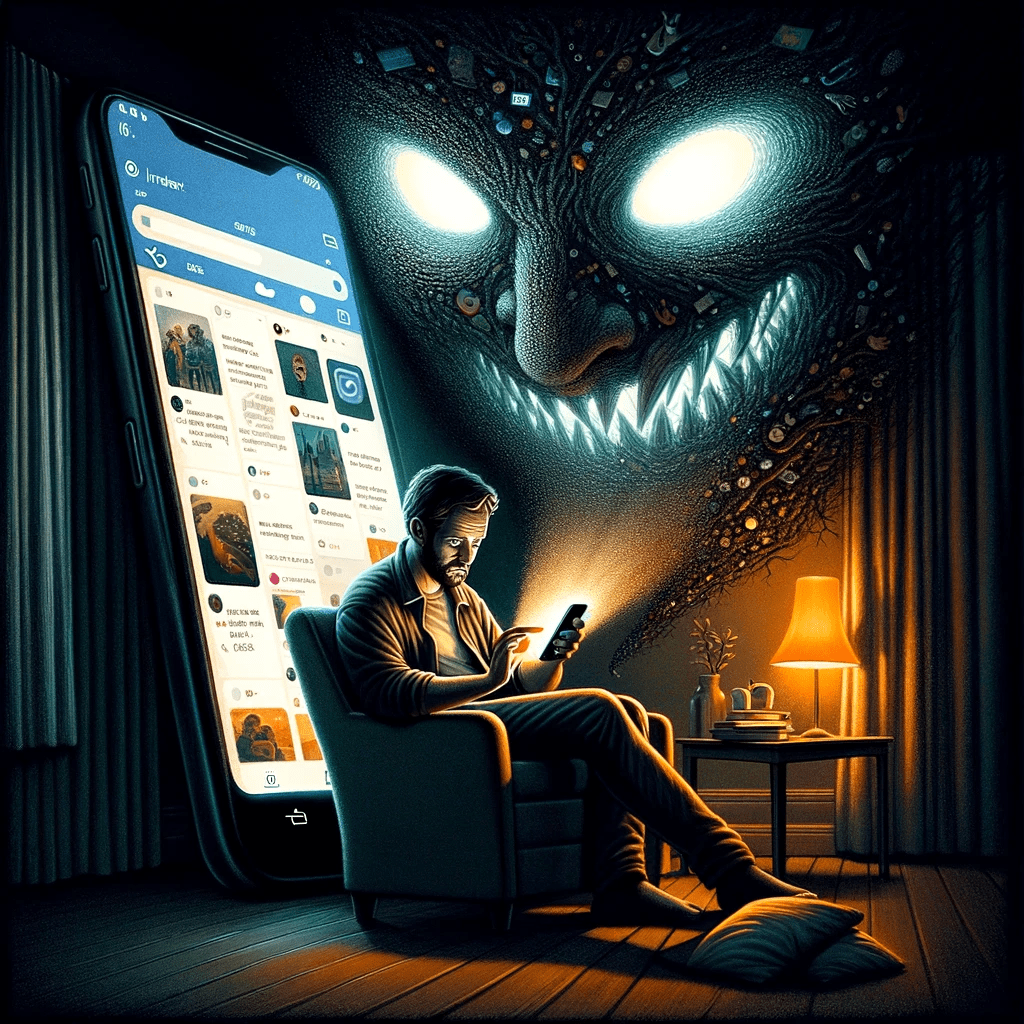
In fact, several years of scientific research and statistics point towards the negative effects of the internet. A study published in PLOS ONE suggests that too much online exposure has the ability to restructure parts of the brain. One interesting but disturbing result in the study pointed towards diminishing grey matter on the wrinkled surface of the brain (cortex), which is associated with memory, speech processing, emotions, and motor control. The longer the duration of addiction, the more pronounced the tissue reduction. Research at the current stage already deems “Internet Gaming Addiction (IGA)” as the most popular internet addiction. The results are worrisome though as one such scientific paper in Nature Scientific Reports suggests that extensive gaming can cause significant changes in the brain’s network structure, making it resemble a brain that has suffered specific damage. This provides a clue that the brains of individuals with Internet Gaming Disorder may have abnormalities similar to those seen in brains with specific damage. However, it’s important to note that this is a complex area of research and our understanding of these processes is still evolving. A big reason for terms like “doomscrolling” not having found a place in the dictionary or internet addiction being controversial among researchers is the lack of enough scientific articles. For some reason, the common belief has not kicked in that internet addiction is also a legitimate addiction. The handful of researchers doing such studies and taking statistics at the moment are paving the way for more knowledge in this area so that people who are largely affected by these issues can be helped.
One very important point has to be made here that concerns almost all of us irrespective of whether you struggle with internet addiction or not. After a busy day in the office, do you go back home and browse social media apps at night just because you could not procrastinate during the day, even though it is costing you your essential sleep time? Although it doesn’t have a widely recognized, specific term, it can be considered a form of “revenge bedtime procrastination.” It often stems from a desire to regain some sense of freedom or control over one’s time, which feels compromised during the day due to work or other obligations. Trust me when I say this – Do not go down this rabbit hole. The occasional sprint of night-time procrastination will turn into a full-time addiction before you know it.
Then what should we do? Awareness without mental engagement is the solution. We have to live in the world that currently exists and is developing. If we could do that while constantly training our minds to stay at a neutral point, we could be aware of the current happening of the world (negative and positive), probably make a difference by doing something useful for society, and still retain our sanity by protecting our mind from being polluted. If you feel the need for it, use digital well-being tools to limit your time on the internet. These settings can be found on your smartphone, where you can limit the time of use of social media apps per day, which works by locking the apps once you reach the upper limit of the day. Additionally, mindfulness, in the context of treating internet addiction, refers to a therapeutic technique that involves focusing one’s full attention on the present moment and accepting it without judgment. It involves asking yourself the hard questions and actively finding the answers to them before or while you do an activity. For example, the next time you pick up your phone to browse Instagram, you can ask yourself why you are doing it and actively consider doing something more productive instead if there is nothing important to see there.
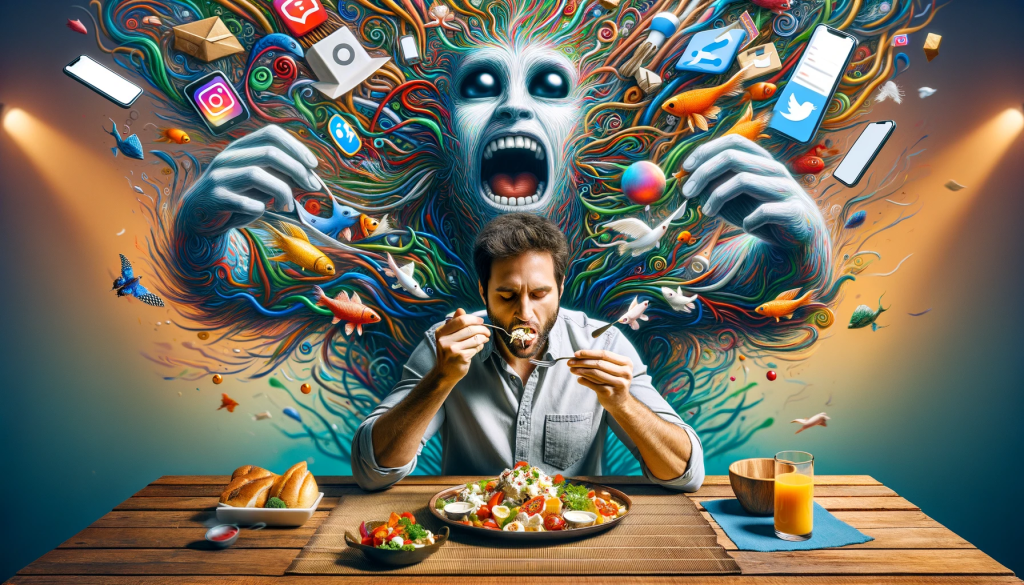
All of this is just a way to train your mind to keep you healthy. And whether you do it yourself without help or use some aid, it has to be done. Better do it while you still can without waiting for life to force you. As they say, it all comes back to bite you. The next time you wonder about a simpler time that was your childhood, think about how you can achieve that peace for yourself, irrespective of the direction in which the world develops. It might not change the world, but it will surely make your world better to live.
Point to ponder? Be Priyafied!
Discover more from Priyafied
Subscribe to get the latest posts sent to your email.

 Priyafied