


Have you heard of the Golden Ratio? It is sometimes called the “divine proportion”. The universe may be chaotic and highly unpredictable, but it still exists within the reach of mathematics. You just need the right numbers and ideas to explain everything. One such magical number is called the Golden Ratio, which is 1.618. It’s just a number; what’s so special about it?
It is a number that explains the smallest of flowers to the largest of galaxies. Quite literally, the Golden Ratio can be found in leaves, petals, sunflower seeds, branches, the shape of hurricanes, elephant tusks, and even spiral galaxies.
Can we see it without knowing mathematics? Absolutely!
Let’s say we want to build a sunflower. How would you arrange its seeds such that it holds together with minimal or no gap between seeds? The best option is to grow in spirals. This is seen in nature as well. Look at this sunflower. The seeds are arranged in spirals, starting from the center. We will try to rebuild this same design.
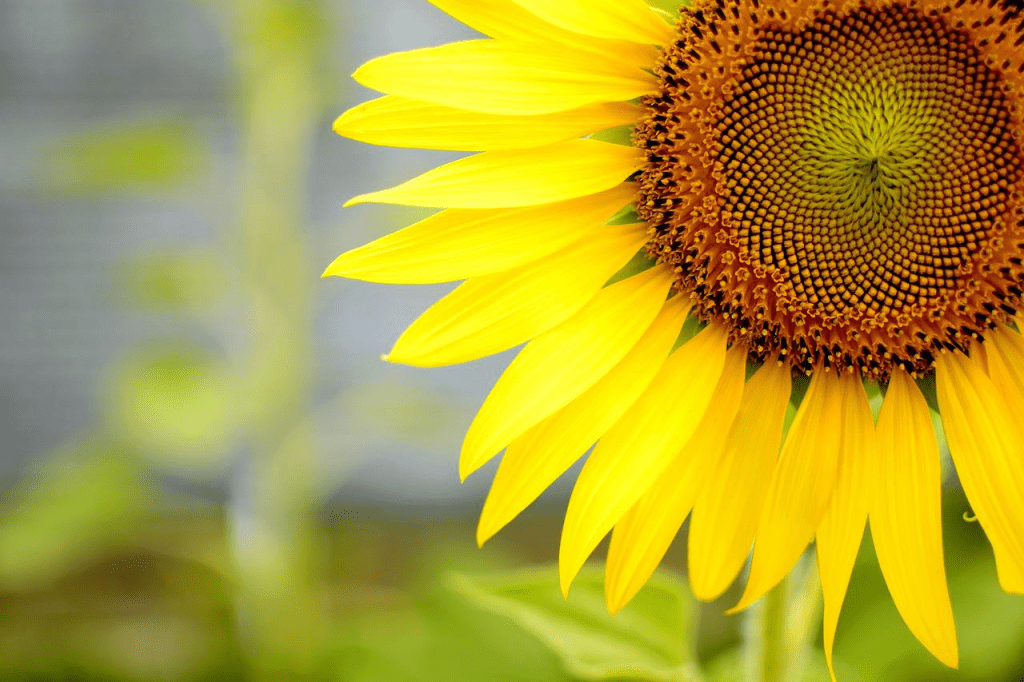
But the main question is, how much do we turn to build the best spiral? If you don’t turn at all, it will be a straight line, which is the least favored. If you take one whole turn, you would still make a straight line.

Let us get a penguin for help and hand over a bunch of seeds to it. I will place a penguin in the center and let it run out in a spiral:

We will go along with the penguin. As the penguin takes one round, it will place one seed. Then it will take another round and place another seed. And so on. The result will be:
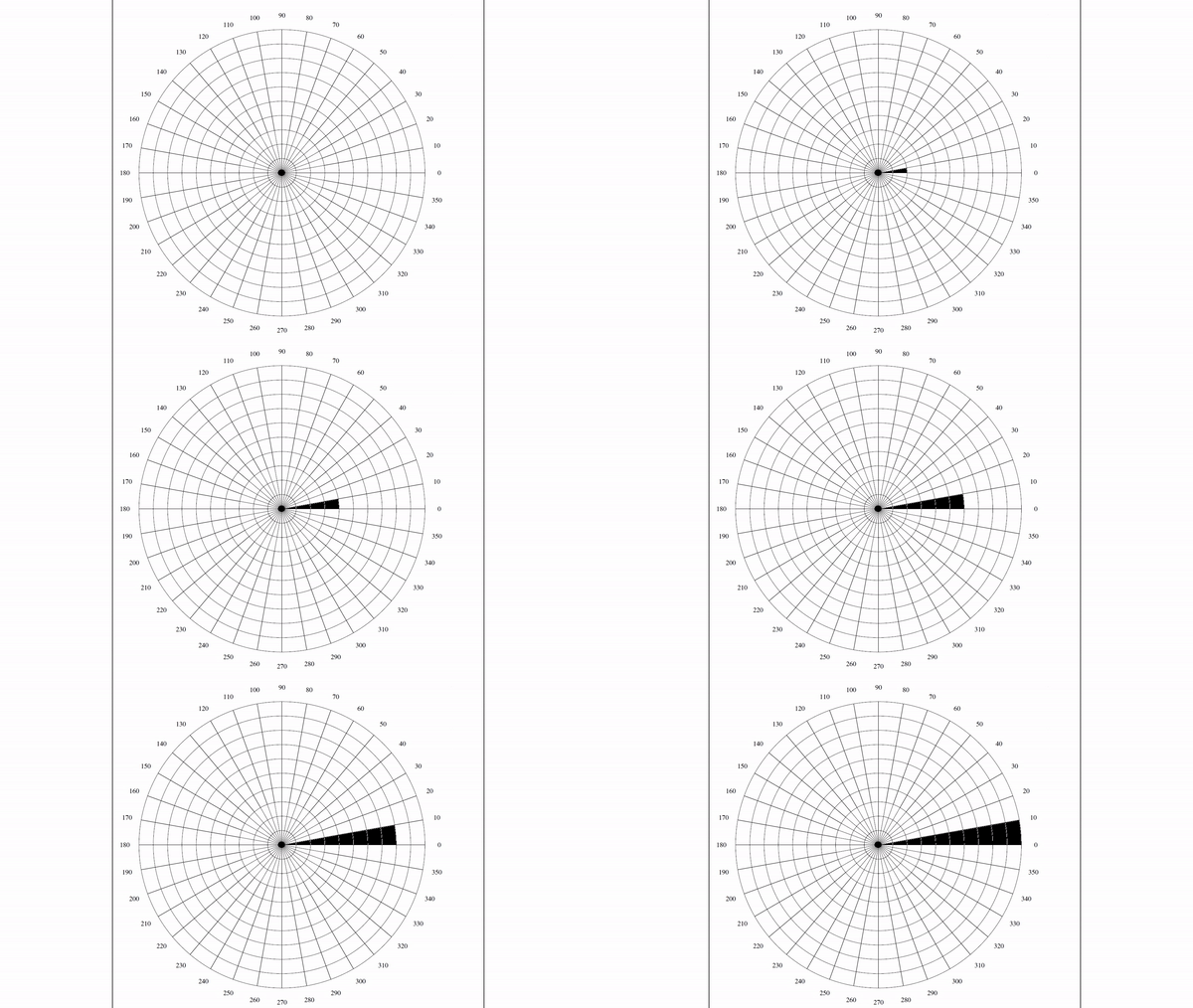
Let us do 1.1 rotations now. After taking one round, the penguin jumps one block ahead and places one seed. Then it continues to finish another round. It will again jump one block and place one seed. And so on. We get this arrangement:
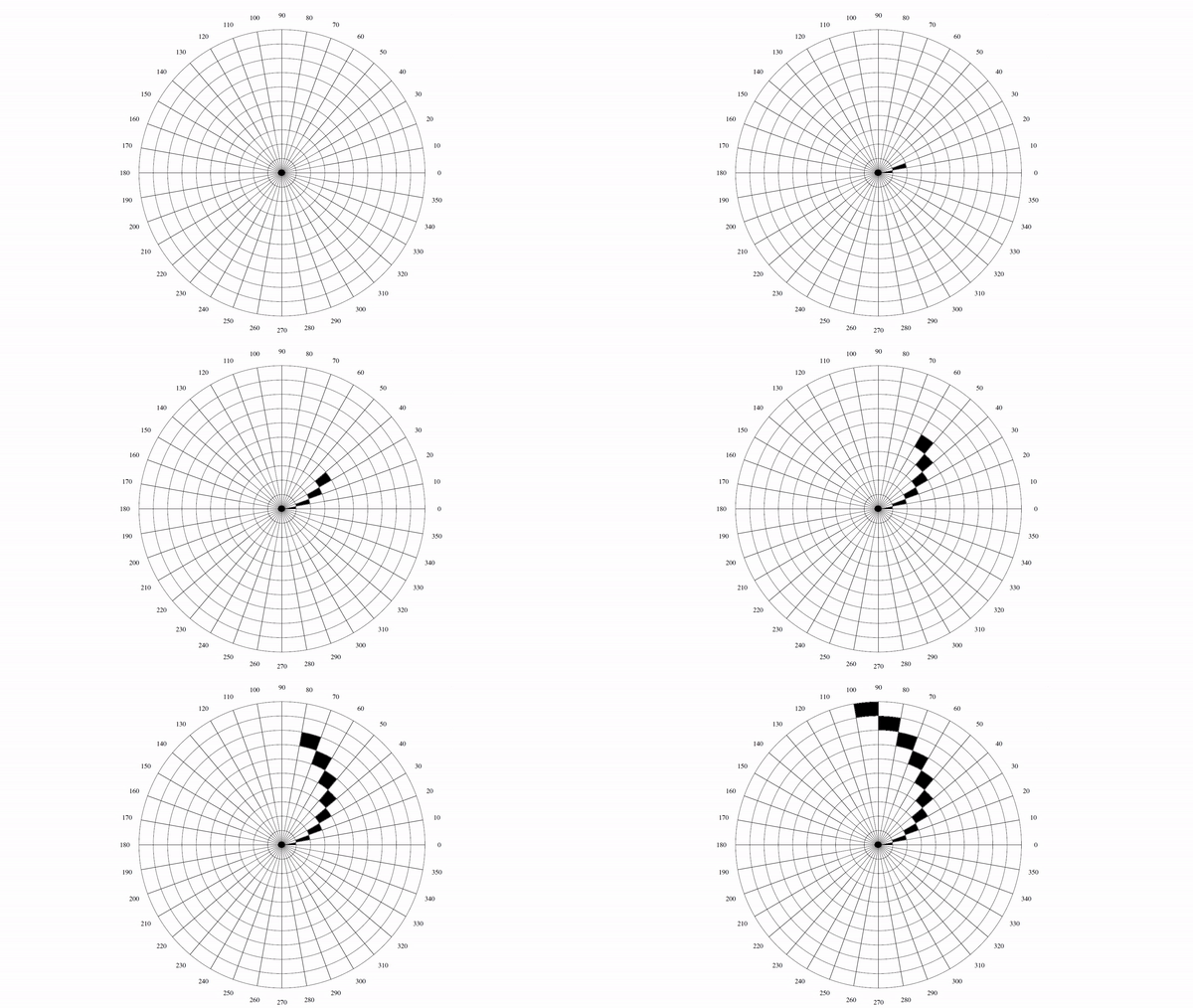
In the same way, we can do 1.2 rotations by making the penguin jump two blocks after each round. We get this arrangement:
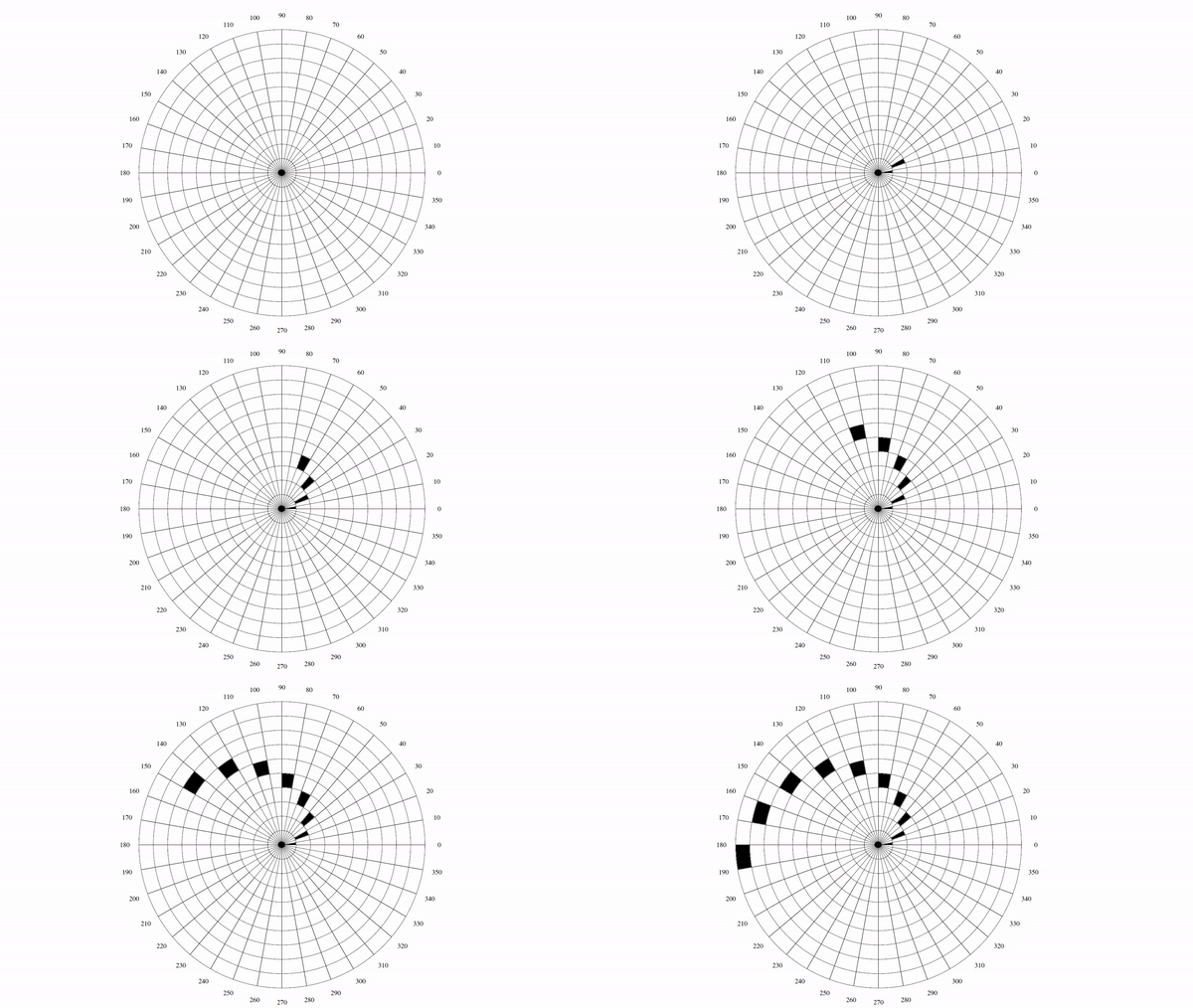
In the same manner, we can do up to 2 rotations as well. after which the pattern will start looking similar. So, where is the pattern that shows the Golden Ratio? Just like we rotated 1, 1.1, 1.2, 1.3, etc. times, if we let the penguin jump 0.618 blocks after each round and place a seed, we will see the pattern produced by the Golden Ratio. Here is the pattern that this number produces:
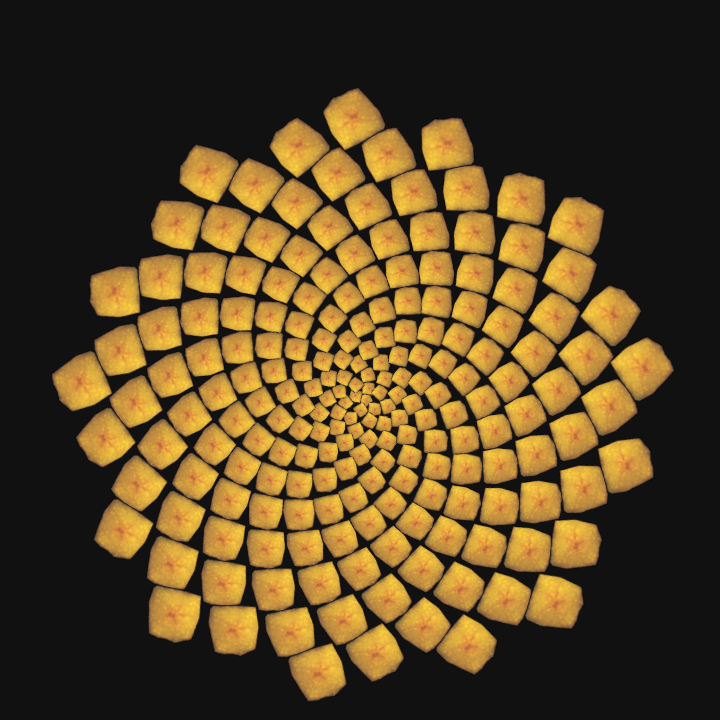
What is so special about it?
Other numbers that are some kind of fractions will start forming straight lines at some point. If I take a random number, say, 0.95, it is equal to 19/20. It will produce the following pattern:
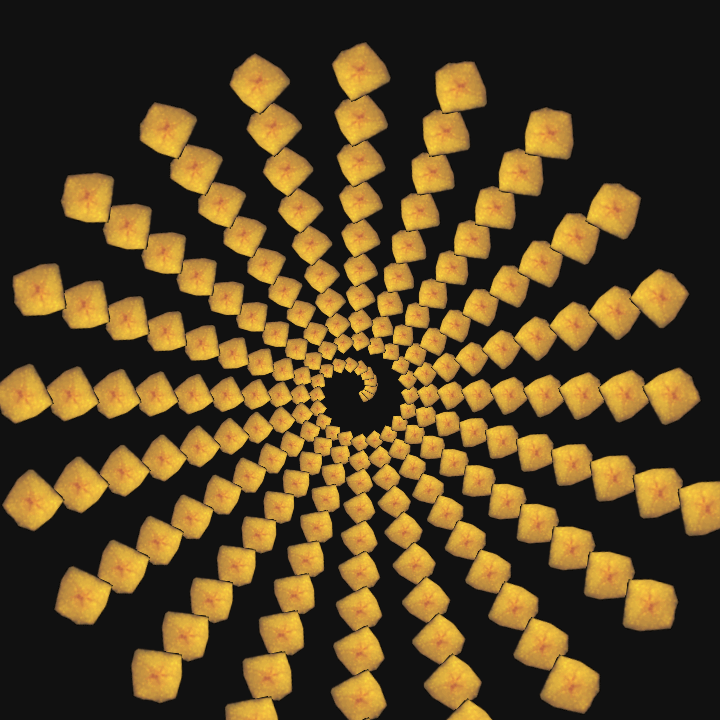
1.618 is one such number that cannot be represented as a fraction (irrational number). Some will say that even the values of pi and Euler’s number are also irrational. But they are close to fractions 1/7 and 5/7, and hence produce gaps. They would look something like these:
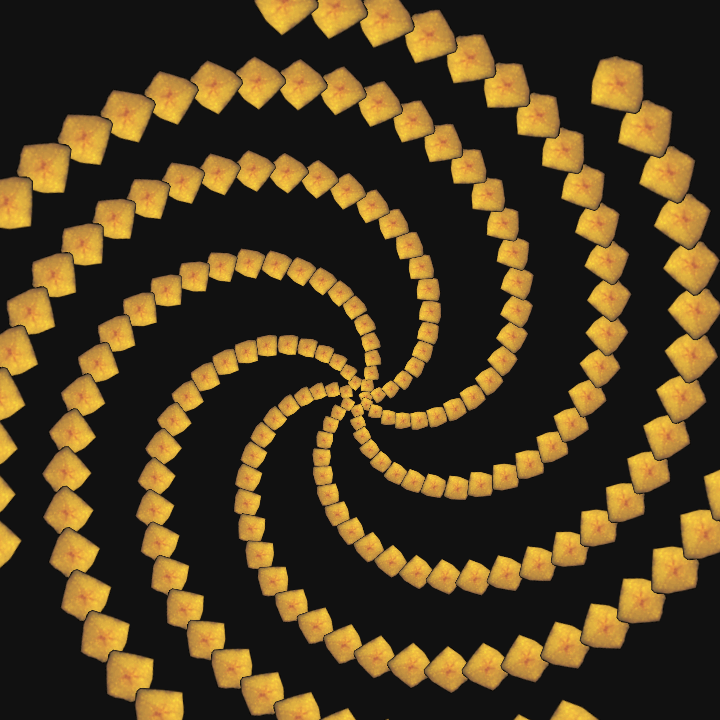

So, 1.618 is very unique. It is not just sunflower seeds that use this number. Even the leaves grow in spirals of this number so that the new leaves do not overlap the old leaves and block sunlight to them, or the maximum rain reaches down to the roots. It is obviously not the only method of survival, as there can be many types of growth mechanisms. But this is the most noticeable and popular in nature.
It is not just nature. Golden Ratio is said to govern the universe. Researchers even claim that spacetime is governed by this number.
The cosmic character of the Golden Ratio
The Whirlpool Galaxy M51, Pinwheel Galaxy M101, Hurricane Katrina, the distribution of planets, moons, asteroids, rings of the solar system, and so on correspond to the Golden Ratio. Researchers say that this is because Golden Ratio corresponds to a property of spacetime itself.
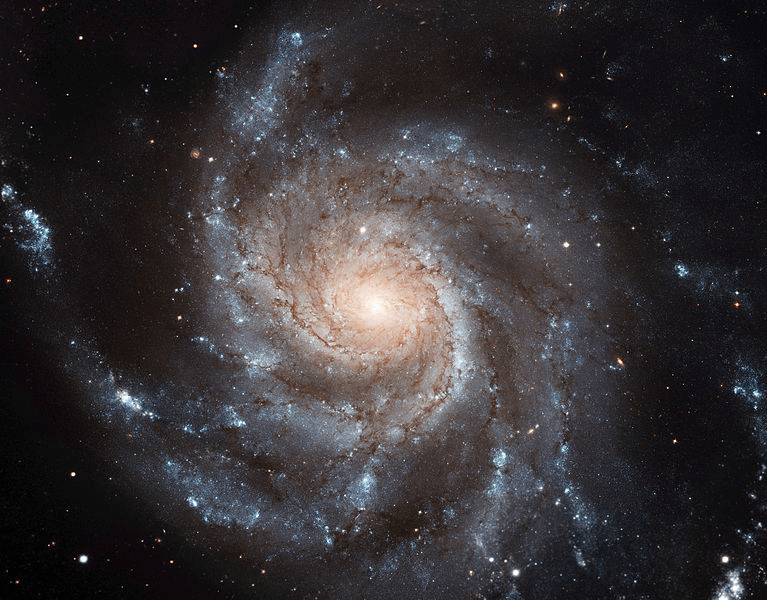
Image: European Space Agency & NASA
Acknowledgments:
Project Investigators for the original Hubble data: K.D. Kuntz (GSFC), F. Bresolin (University of Hawaii), J. Trauger (JPL), J. Mould (NOAO), and Y.-H. Chu (University of Illinois, Urbana)
Image processing: Davide De Martin (ESA/Hubble)
CFHT image: Canada-France-Hawaii Telescope/J.-C. Cuillandre/CoelumNOAO image: George Jacoby, Bruce Bohannan, Mark Hanna/NOAO/AURA/NSF
Some researchers think that in the multiverse theory, our universe exists in a lucky coincidence of having this Golden Ratio, and the other universes may not be as lucky to have this order. But why the universe follows this rule is still not very clear. So, this Golden Ratio is claimed to be keeping everything in order in this universe.
Does this claim hold any weight? Even if we disregard the claim, it is evident that somehow the universe manages to achieve the precision resulting in the Golden Ratio. But how? In part 2, I will explore the cosmic character of this number, and you will be able to derive this Divine Proportion yourself even if you do not know mathematics. Stay tuned!
Cover image credits: Wawawiwa comics
Stay satisfied! Stay inspired! Stay Priya-fied!
Discover more from Priyafied
Subscribe to get the latest posts sent to your email.

 Priyafied
Well explained
LikeLiked by 1 person
1.618=Priya a jewel💎 in the crown👑 👍👏
LikeLiked by 1 person
Thank you, Appa! 😁😅
LikeLike