


There are strange things, and then there are stranger things that exist or happen in this world and universe that is not known commonly. Over so many years I have come across several of such ideas, things and processes that have made me rethink my notion of the environment in which we live. It also includes many everyday concepts which we have believed but I was surprised to know the complete truth. In addition, there are trivial questions we ask that have interesting answers if we look at them objectively.
Light that travels faster than light!
Did you know that in some cases, light can travel faster than the accepted speed of light? Light travels 300 million meters in a second. But this is in vacuum. When light travels in any other medium, it’s speed differs. Based on the medium, it can be slower or faster. So, when we talk about the speed of light in space, it is constant because space is vacuum. But apart from that, it depends on its environment, and the accepted speed of light becomes only a very rough estimate. For example, light will travel slower through diamond as compared to air. And in plasma, like the ionosphere, light travels faster. As refractive index goes up, the speed of light goes down. Basically, it tells us how much the speed of light will differ because of the medium as compared to air.
Idea for a parallel universe?
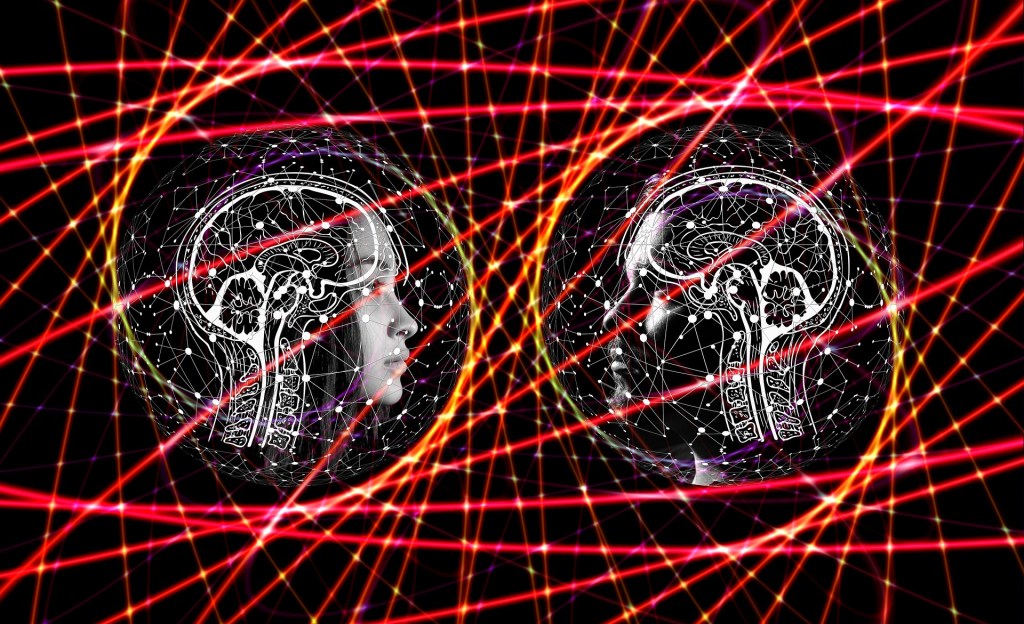
Quantum entanglement is a strange concept. It looks like a very difficult process to understand. But the basics are quite simple. It essentially means that two particles are linked in a way that they can exchange information or interact even when they are not physically connected. In simple terms, if me and my friend are two particles, we can exchange information with each other even if we were sitting on two different planets without any technical or physical aid. This phenomenon has boggled scientists for decades because although the basic premise is clear, the questions that arise beyond the basic idea makes this concept tough to understand. But the idea that two particles may be undergoing the same effects even if they are separated by a galaxy, does push the idea of parallel universes closer to understanding. It means there may be another you in another universe in the same or different setup, but what you do here affects the other you, and vice-versa!
Is water wet?

Sometimes we ask trivial questions that sound stupid at first, but they’re insightful. For example, how wet is water? Water wets things, but is water itself wet? And how can we quantify such a thing? A simple experiment could answer questions like this. A completely dry tissue paper has 0% water. If we take the dry tissue paper and lightly dab it with water, the tissue paper would have less than 0.001% water. Now we pour a spoonful of water on it. This increases the percentage of water. If we drop it in a cup of water, the percentage of water would increase. Subsequently, dropping it in a swimming pool would mean that it is more than 99% wet. However, even if you drop the tissue paper in the ocean, it will never be 100% wet because the system still contains the tissue paper. It means that the water was able to wet the tissue paper. The reason is because the water could interact with the tissue paper, the tissue paper is wet. So, by this chemistry, water is wet because water molecules interact with each other. The only arguments against this are in the semantics of the term “wet”, i.e. something along the lines of fire burning things but not burning itself. But if we are here to discuss science, getting caught in semantics will definitely get us nowhere. Hence, in short, water is wet.
Can black get blacker?

Let’s talk about colors. There’s black, and then there’s Musou black. And then there’s Vantablack. They’re all black, but get “blacker”. What does this mean? If we paint a room black from inside completely and place a bulb inside the room, we will still be able to see the inside contours of the room vaguely. But if we paint it with Musou black or Vantablack, the only thing we will see is the bulb. The visual will be something like seeing the moon in space. This is because of the basic phenomenon that black absorbs all light. So if the black component is increased, more and more light is absorbed. And Vantablack absorbs 99.965% of light. Recently, researchers at MIT created the blackest black material known yet, which absorbs 99.995% light. But of course, this discovery is always a moving target to reach 100%, i.e. a perfect black body. Let’s see how much blacker can black get eventually.
Are we heavier at the center of the Earth?
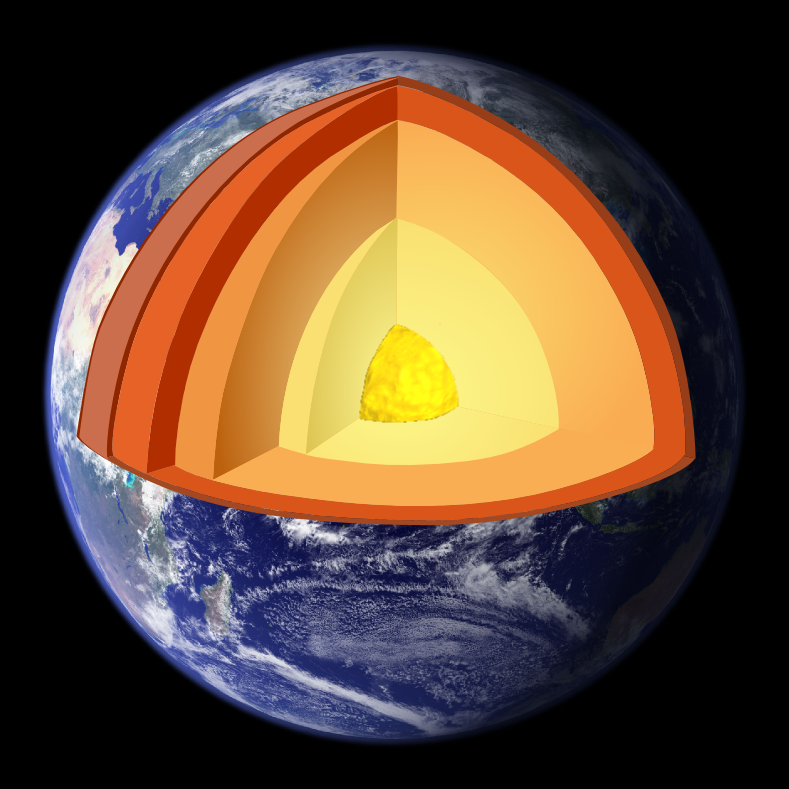
Some comic books have made their characters travel to the center of the Earth. As we move away from the Earth into space, the gravitational pull of the Earth becomes weaker. So by that logic, the creators of some comic books would assume that as we move to the center of the Earth, the gravity becomes stronger. But that is not what happens because gravity not only depends on the distance, but also on the mass enclosed. If we were to stand at the exact center, there is no mass enclosed, and hence, no gravity. So no, you won’t get heavier as you move to the center.
What makes the river Ganga more pure than other rivers?

The river Ganga in India is said to have waters that purify and heal. Other than cultural and religious beliefs, this fact has scientific reasons, which was never amplified to people. There is a type of virus that exists in nature called Bacteriophage. It is a bacteria-eating virus, that is, it feeds on bacteria for its survival and does not infect humans, as our body already has several types of such bacteriophages. These are found in most of the freshwater bodies, but there are over 1100 species of them found in the river Ganga, where their proportion is three times that of infectious bacteria. These bacteriophages have been used for decades as antibacterial agents, and since several years, they have been used in the food, dairy, diagnostics and antimicrobial drug industries, as well as in research. The most striking evidence of the purifying nature of Ganga is the fact that the rate at which organic waste is decomposed in it is 15 to 20 times faster than other reported rivers in the world!
Your brain can store the entire internet and more!

Although a final word on this is a long way off, it is estimated that the human brain can store over 1000 terabytes of information. This kind of estimate can be larger or smaller than the actual value, but it a rough estimate. Scientists have found that the human mind can store information in 26 different ways to code “bits”, unlike only 0s and 1s (binary) in a computer. This estimate can vary largely from person to person, but compared to technology, our brain is an underutilized superpower. Our brain has over 85 billion neurons, each of which can form about 15000 connections with other neurons. Formation of these connections implies creation of memories or information in the brain. So, to put it simply, human brain can make 1275 trillion memories! It would take much more than 300 years of continuous TV as well as the internet to fill up that space! In order to run a computer having this capability, over 1 gigawatt of power would be required, while our brain does the same on just 20 watt of power. Did your mind just blow your mind?
Science defying wonders of the world

There are some truly unbelievable places in the world where the phenomenon seems like magic, but is actually not. For example, if you pour water down on the Hoover Dam, Nevada, USA, the water will splash up instead of go down. This gravity defying water is because the very strong updraft from the dam. Similar phenomenon happens in reverse waterfalls where the draft of wind is so high that water is forced to flow up, creating a reverse waterfall. Such waterfalls can be seen in Faroe Islands and Naneghat, Maharashtra, India. Another wonder that exists is a magnetic hill, and many such hills are recognized in the world. One such hill exists in Leh, India, where the hill appears to go up and if you leave your car in neutral, it will automatically start moving “uphill”. This is nothing but optical illusion where the surroundings themselves are skewed due to the absence of the visibility of the horizon. So a slope going downhill will appear to go uphill due to optical illusion.
We possess organs that our ancestors had!
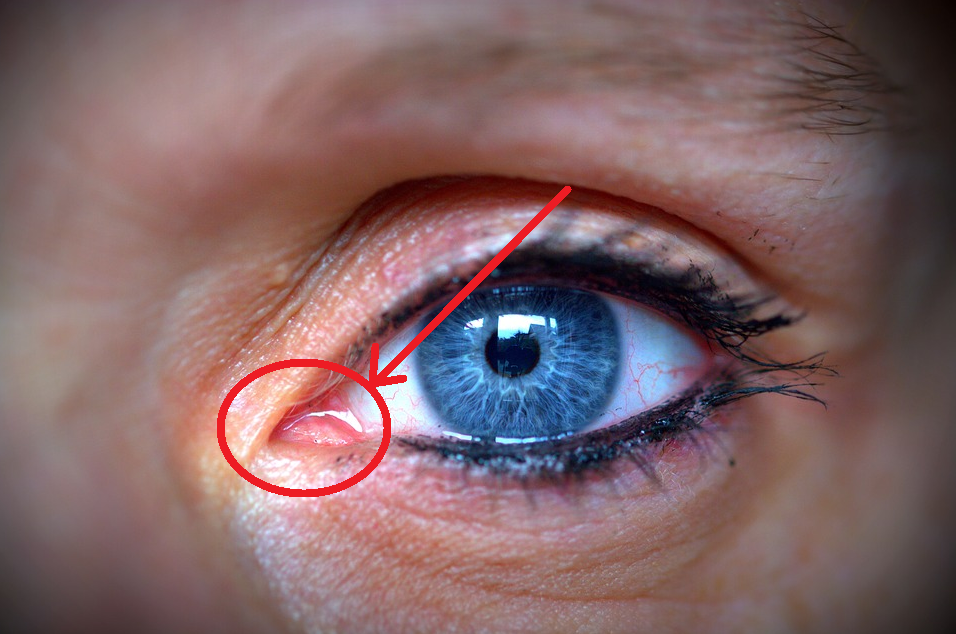
Human bodies undergo development based on time, era, lifestyle and requirement. There are some organs in human body that our ancestors needed for survival, but they are mostly redundant now. While some have disappeared, there are some which still exist, but perform no function. Many of you might be aware of some major ones like the tail bone, appendix or wisdom teeth. But there are some which surprised me as well. The small fold of skin in the inner corner of our eyes, called the plica semilunaris, is actually a remnant of the third eyelid our ancestors had millions of years back (See photo above). Likewise, some humans still retain the ability to move their ears. This is done using auricular muscles that control the movement of the external part of our ears. When humans eventually started turning their heads instead of ears towards the direction of sound, these muscles lost their functionality, although some humans can still do it to some extent. Additionally, there are some behavioral instincts that are vestigial, like goosebumps! Did this information give you goosebumps?
How much time is one second?

I know this is not a strange or fascinating new piece of information. But I still add it to this list because not many people know about it. The measurement of time has seen several methods throughout history. Sundials measured time in degrees. The earliest mechanical clocks divided an hour into parts (quarters, halves, thirds or even 12), but it wasn’t uniform. Then pendulum clocks were developed, followed by quartz crystal-based clocks. But the problem with these clocks was that they were subject to mechanical, environmental or other geographical problems, which would make time non-uniform for different people. For example, we know that pendulum clocks slowed down over time and needed to be powered with key every now and then, which would make time non-uniform for two people in the same city. Hence, atomic clocks are used as a standard since 1967. According to it, one second is precisely “the time of 9,192,631,770 periods of the radiation corresponding to the transition between the two hyperfine levels of the ground state of the caesium-133 atom” (at a temperature of 0 K). This line basically means that a particular atom is excited under very specific conditions and the resulting time is noted for a fixed period of radiation. Such atomic clocks are highly precise and are not affected by environmental or geographical changes. There are laboratories that maintain the standard of these clocks in different countries. For example, the Indian Standard Time (IST) is maintained by the CSIR-National Physical Laboratory, New Delhi, India.
Did you know that in the Vedic units of time, truti is given as the smallest unit of time? Although different metrics were defined for different purposes, one truti is the time taken by light to travel through three tresarenus (combination of 6 atoms each).
There are a lot of things within you, in this world and even outside of it. You just have to keep your mind open to inputs and knowledge. Everything has a reason. So, search for the truth behind the illusion. Once you see the reality, you cannot see the illusion anymore. Point to ponder?
Stay mystified! Stay inspired! Stay Priya-fied!
Discover more from Priyafied
Subscribe to get the latest posts sent to your email.

 Priyafied

Nice, something new which is a news for many like me, great👏👍 keep up the good work, stay healthy and stay blessed🙏.
On Sat, 26 Jun, 2021, 4:25 pm Get satisfied, Get detoxified, Get mystified, Get Priya-fied…., wrote:
> R Priya posted: ” There are strange things, and then there are stranger > things that exist or happen in this world and universe that is not known > commonly. Over so many years I have come across several of such ideas, > things and processes that have made me rethink my notion” >
LikeLike
Thank you Appa☺️
LikeLike