

We know that anything in excess is not good. But for a society as a whole, it can be very harmful. Scientific illiteracy is taking over society like a dangerous plague and I highly doubt if we will be able to recover completely. The definition of scientific literacy is not a standard one in the world. For example, the United States National Center for Education Statistics defines it as “scientific literacy is the knowledge and understanding of scientific concepts and processes required for personal decision making, participation in civic and cultural affairs, and economic productivity“, the The OECD PISA Framework (2015) defines it as “the ability to engage with science-related issues, and with the ideas of science, as a reflective citizen” and so on. But we get the drift. In short, a scientifically literate person has the competence to make decisions for themselves by evaluating and researching matters for themselves because our world economy, personal lives and political issues are intertwined with science. This is simple, but how many are capable of following it?
If you have been a follower of my blog, you have read several articles of mine where I delve deep into science. It may be too complicated at times for people without a scientific background, but that is not the idea of having scientific literacy. The idea is to use the common concepts of the world to make your life easier. It is as simple as buying an electric grinder. One may continue to use pestle and mortar to grind their spices if they were incompetent to evaluate an electric grinder based on requirement. Scientific illiteracy runs deep among people and ranges from trivial matters like a grinder, up to anti-vax tendencies. While bigger examples are still observable, I have compiled a list of trivial but glaring scientific illiteracy incidents that will shock you, even if you’re one of them.

Campaign to ban dihydrogen monoxide
In 1997, Nathan Zohner, a 14-year old, submitted a science fair project to appeal to ban DHMO (Dihydrogen Monoxide). He presented some convincing arguments to call it an unrecognized killer. He pointed out that this compound is so harmful that it can corrode even metals and cause severe burns. It’s consumption can cause excessive urination and bloating, and is also capable of suffocating you. Moreover, if you depend on it, withdrawal can kill you! Most of his classmates voted to ban this compound. This story was even picked up by several news outlets.
However, lucky for us, this compound can never be banned because DHMO represents the chemical formula for water! Although it only started as an article in the April Fool’s day edition of a Michigan newspaper, it was thrust into pubic attention from Nathan’s project. This gained so much traction that a parody website by the name dhmo.org was set up. I will remind you again that it is a parody website and not to be taken seriously, because obviously water cannot be banned! It just goes to show how gullible scientific illiteracy can make us.
Image credit: By Booyabazooka at English Wikipedia – Transferred from en.wikipedia to Commons by Jay8g using CommonsHelper., Public Domain, https://commons.wikimedia.org/w/index.php?curid=16278333
Anything chemical is bad, anything natural is good
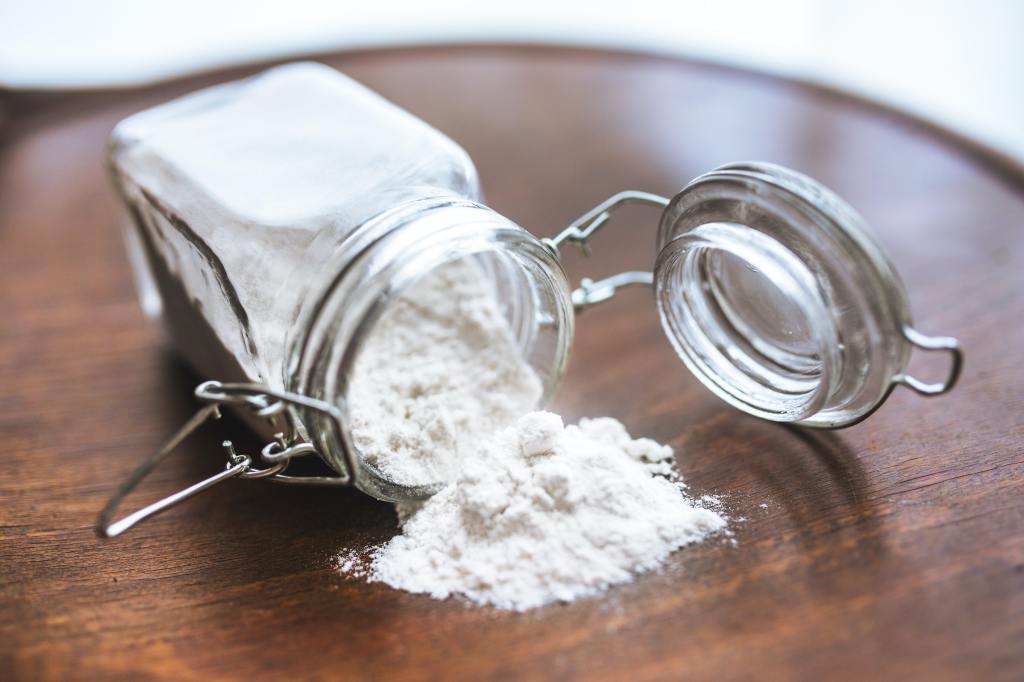
Several news outlets and content farms have been running such campaigns for years and continue to do so. For example, YouTube channels like Blossom, 5-Minute Crafts etc. run videos that involve setting an edible item to fire and seeing if it turns black. If it does, then it has chemicals and therefore, is bad. They did this for items like cheese, spices, medicinal tablets and so on. Let’s talk about additives. In their videos, they say that any food item having any additives is bad because additives are chemicals. While they have taken the right argument, they have given a wrong conclusion to it to suit their needs. If I told you that all cakes have a chemical called NaHCO3 in them, you would freak out. But then once I tell you that it means baking soda, you’d be okay with it. It is called E500 in the ingredients printed at the back of the item. Creators like Ann Reardon, who is a food scientist, have been debunking these trends in food for a long time, yet scientific illiteracy prevails.
Image credit: Photo by Kaboompics .com from Pexels

Cluelessness of authorities
Good research needs funding. But, several scientific projects are denied funding or belittled by authorities in several countries for not being of advantage to humanity. However, it is important to understand the reasons behind the idea of that research proposal. It is the reason why there are specific funding bodies, which ideally must not politicize science, but we are far from that utopian world. For example, a politician condemned the research on fruit flies in Paris, deeming it a waste of money for not doing any public good. However, it was rightly countered by a genetic scientist, who pointed out that fruit flies are fundamental for research as they share more than half of their genes for biological processes with humans, and have been used for over a century to understand how our genes work. Yet people evade thinking before speaking.
Image credit: Photo by RODNAE Productions from Pexels

Microwaves cause cancer
It is widely circulated “forward” on social media platforms and keeps gaining traction. It is a scientifically proven lie that somehow keeps making its way into people’s minds. Microwaves, that we have at our homes, are absorbed by food and the molecules in food start vibrating (all of them, not just water!). This friction heats our food by a method based on dielectric heating and is safe to use. What about throwing our hand in there, or a microwave leak? Microwaves do not produce ionizing radiation unlike X-Rays. This means they don’t have enough energy to remove electrons from atoms. So they cannot break chemical bonds in DNA, and hence are incapable of causing cancer. That being said, you shouldn’t expose yourself directly to microwaves intentionally, because they would obviously cause severe burns. I hope that is clear by virtue of common sense!
Image by EK_Song from Pixabay

Earth is flat, Moon landing was fake and Sun orbits the Earth
I purposely clubbed these together as each of them is as ridiculous as the other. Though most of you reading here may agree with me that these are absurd claims, there are several who believe these theories. If I pick out the flat Earth claim alone, more a third of today’s youth believes in the flat Earth theory according to a recent survey by YouGov. As shocking as it sounds, if a single Flat Earther Conference attracts over 200 participants in a single city, we may be underestimating the movement. This particular scientific illiteracy started from being laughable, but ended up being concerning, as after centuries of knowing that the Earth is round, accomplished scientists are having to come out and debate on public platforms with inexperienced teenagers and adults in order to put an end to this pointless discussion. The shape of the Earth was a discussion and debate over 2000 years ago, and history repeating itself is only a regression in science.
Image by Vicki Nunn from Pixabay

COVID-19 misinformation – Part 1
Perhaps the biggest danger of scientific illiteracy is being seen in the face of the current pandemic. Misinformation is definitely spreading faster than correct information. We all know that. But how many of us can distinguish between the right and wrong information? Anything woven in the net of highly scientific terms will sound right, but it does not have to be right. It must be validated by facts and evaluated with a sensible mind. I will take the case of hand sanitizers as an example. Shortage of hand sanitizers in this pandemic has led to content farms and “how-to” websites generate recipes for hand sanitizers that can be made at home. But, keep in mind that the correct recipe is everything and it does take some math to do it right. According to the health authorities, the sanitizers must have at least 60% alcohol so that they are capable of breaking the virus cover. It is important to note here that the final product must have 60% alcohol, and not the initial product you started with. Among several videos, I found a video of food scientist and YouTuber, Ann Reardon who has aptly explained this concept, and some other concepts, and you must take a look at it.
Image by Indrajit De from Pixabay
COVID-19 misinformation – Part 2
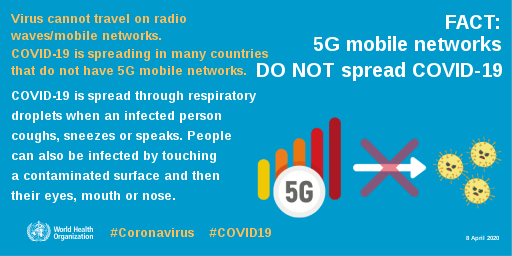
Extending on misinformation about COVID – 19, the conspiracy theory of the 5G technology being a cause or promoter of the coronavirus infections has been doing the rounds for quite a while. I was really surprised at this suggestion myself, but I decided to reach the root of the problem. There are several rumors about the connection between 5G and COVID-19, like 5G weakens the immune system and makes people more vulnerable to coronavirus, or that 5G itself transmits coronavirus, or that COVID vaccinations would include tracking chips which will be activated by 5G technology etc., resulting in a cocktail of misinformation. These have been debunked from several sources, and a good detailed analysis on this has been done by theconversation.com and euronews.com. In short, these rumors are nothing but an extension of long running conspiracy theories about mind control experiments. Scientifically speaking, droplets obviously cannot be transmitted by 5G waves, and 5G is non-ionizing and hence cannot cause any damage to our cells to affect our immunity. Also, a technology to inject tracking chips, complete with a battery, via a vaccine needle is not even possible. It is time to put these nonsense rumors behind us.
Image credit: WHO-openaccess (WHO original PNG file)Cantons-de-l’Est (from PNG to SVG)Cantons-de-l’Est (translation from English to French), CC BY-SA 3.0 IGO https://creativecommons.org/licenses/by-sa/3.0/igo/deed.en, via Wikimedia Commons

Taking satirical websites seriously
There are several satirical websites around the world, which publish parodies of news having a satirical bent, like The Onion, The Beaverton, Borowitz Report etc. They aren’t fake news websites which propagate lies to create sensation. But the only purpose of satirical websites is to create humor and must not be taken seriously, for which awareness is necessary. Perhaps the most popular one is ‘The Onion’, whose articles have been misread several times. Based on an article by The Onion, a Bangladeshi newspaper reported the moon landing was fake. Another example is a recent ‘forward’ doing rounds that a police officer kidnapped his own son and then solved the case himself to get a promotion, which is based on an article by The Fauxy (another satirical website). Although these were harmless even if believed, but some subjects can take a dangerous turn if believed. For example, when the Capitol police launched an investigation based on an article by The Onion about a fictional hostage situation several schoolchildren at the Capitol building in the US. Incidents of such websites being taken seriously happen so much, that there is an online community on Reddit dedicated to ridiculing those who have been fooled called ‘People who ate The Onion’. Hilarious, but again, how gullible can people be despite these websites openly stating that their articles are satire and not to be taken seriously?
I think we all learnt a little something with this list. There have been tone deaf statements made by people, even the famous people in public that show the extent of scientific illiteracy in people. In a talk, Neil DeGrasse Tyson gave several examples of scientific illiteracy among people. For example, when a politician said that he changed his views by 360 degrees, or fear of numbers leading to actual buildings skipping the labelling of the 13th floor. Other than these, there are heaps of YouTube videos showing people being clueless about basic question. For example, most were unaware of a pound of cotton and a pound of stone being the same weight (because they both weigh a pound), or answer to a simple question like five times five. While I wish I was making these up, I am really not. Check out videos on YouTube to see what I mean. There are heaps of other matters that need attention like vaccinations, dietary science, natural phenomena for safety, basic chemistry, evolution and so on. I agree that complicated science is meant for specialists to design special things like satellites, telescopes, nanomedicines, enzymes etc. It is human tendency to only pay attention to topics that affect their everyday life, and rightly so. Even in this case, I see no reason to skip difficult topics that are also important for your life. In other words, as physicist James Trefil said “…no matter how technological the economy becomes, it remains a fact that most people will never need to do science for a living. Everyone, however, will have to function as a citizen, and they will need to be scientifically literate to do so.”
If the science behind the newest electronic devices, electrical appliances and even cooking is understood by people, what is keeping them from knowing the law of inertia to avoid falling down while getting off a bus, or knowing basic food properties so as to avoid situations like drinking water over milk (milk digestion is slowed down and it becomes acidic), or just knowing basic math so that we can keep a check on our bills and shopping. It is really important to ask the question “How is this going to help me?” Some topics can be out of your interest, but before reaching out to that, we must master those things that actually affect our lives. The point is not about knowing all the answers. The idea is to be aware of the framework we live in so that we can ask the right questions. If we all start doing this, there is still some hope of fighting scientific illiteracy and reinstating common sense. Point to ponder?
Be inspired! Be satisfied! Be Priyafied!
Discover more from Priyafied
Subscribe to get the latest posts sent to your email.

 Priyafied
Wow amazing! nice to read !
LikeLike
Thank you ☺️
LikeLike