

Astronomy and Astrology are two fields cut from the same cloth, but ended up being worn by different people. They started alike, and down the line somehow let go of each other. As a result, astronomy gained a reputable status, and astrology ran down into a “pseudoscience” definition. How did this come to happen? In this article, I will touch down on how and why astronomy and astrology parted ways and the basis of the major forms of astrology practiced in the world. My story continues from my previous article, where I talked of why Ophiuchus or any other constellation has no place as a Rashi (Zodiac) in Vedic Astrology apart from the existing 12 of them. You may go back to read it here.
Astronomy and Astrology: Brothers from the same mother
Astronomy is the study of celestial objects and phenomena. Astrology is the study of celestial objects and phenomena, which is extended into predictive astrology. Now I put forward the definition of astrology and astronomy according to the Cambridge dictionary:
- Astrology is the study of the movements and positions of the sun, moon, planets, and stars in the belief that they affect the character and lives of people.
- Astronomy is the scientific study of the universe and of objects that exist naturally in space such as the moon, the sun, planets and stars.
If you decode both the definitions, astronomy and astrology, both study the natural celestial objects. Two differences can be noted here: –
- Astrology extends into prediction using the study of celestial objects
- Only astronomy has been categorized as “science”
If you note, these definitions are pretty much the same as the statements I made in the beginning of this section, minus the obvious jibe at astrology only because astrology uses space study for prediction and scientists today haven’t been able to come up with a fixed scale to measure its correctness or methods. Does that make it any less valid? To cement my question, consider the case of the remote control. In 1898, Nikola Tesla invented the first remote using radio waves. Although the experiment failed to materialize commercially, it did induce the idea of the remote control to the scientific community and the concept caught on to further developments, ultimately leading to the current world advanced scenario in this field. Before this idea occurred to Nikola Tesla, the idea of the remote would have been scoffed at because there was neither an intellectual understanding nor a measurable method of testing. Does it make the remote control any less valid?
Space study was always a part of astrology. In fact, the basics of astrology began with sky watching, or Khagolshastra, as it was called at that time. The astrologers were astronomers too, who knew the sky map by heart and space related phenomena on their finger tips. Eventually with the passage of time, astrologers focused more and more on predictive astrology and the importance of knowing the space and celestial bodies was not passed on. As a result, a separate “field” was astronomy took birth when people realized that the space needs to be studied, without realizing that their roots already had the required advancements. The rapid chain of events that unfolded thereafter, lead to a split between astrology and astronomy.
Astrology around the world
While there are more than 10 forms of astrology being practiced currently in the world, and several more that have evolved over history, I will focus today on the two most commonly used forms – Western astrology and Vedic astrology.
Western Astrology
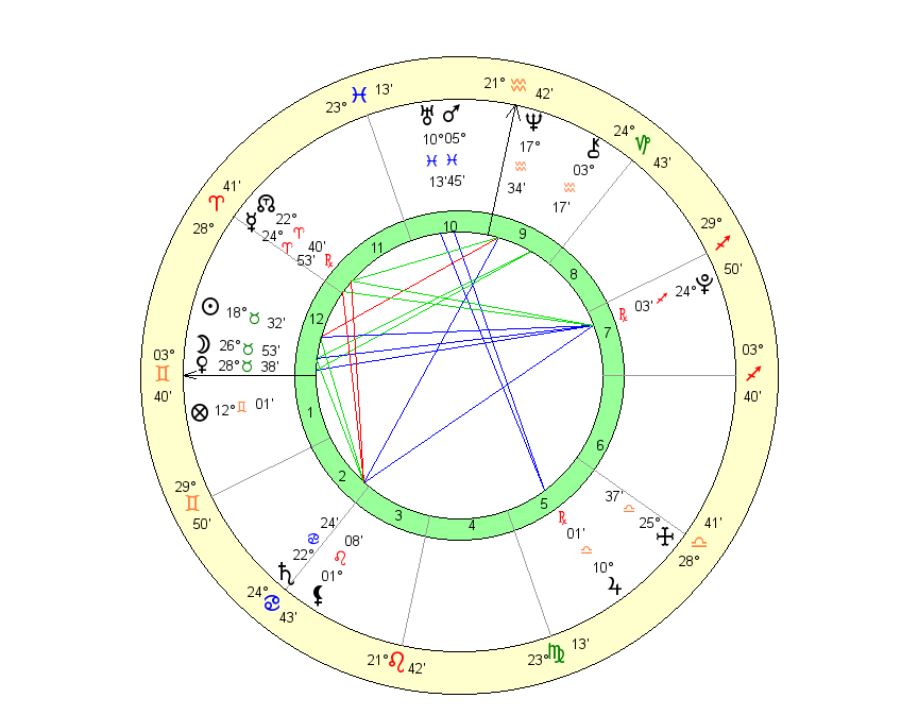
Western Astrology is a type of Tropical Astrology practiced in western countries, and hence called the Western Astrology. It is a system that is based on Ptolemy’s system which is described in his book Terabiblos. His work is said to have passed on from the Hellenistic astrology, that was practiced in Egypt in the Hellenistic period, which in turn was a continuation of the Babylonian Astrology.
Tropical Astrology is based on the idea of tropical zodiac i.e. the sun comes back to the same point on the Ecliptic after one revolution around the Earth, as seen from the point of view of the Earth. This point is called the Equinox, and is overhead the equator, i.e. the date when the day and night is equal. This date, which falls around 22nd March every year, is then considered to dictate the first sign, Aries, followed by the others thereafter. The name of the sign at a particular time of the year has no bearing to the actual constellation, and is based on the seasons of the Earth. However, this equinox itself is moving westward i.e. opposite to the motion of the sun by 50.26 arc seconds every year, called the “Precession of the Equinoxes” (about which I have talked about in my previous article here). During Ptolemy’s time (2nd Century CE), the sun rose from the constellation of Aries. After all these centuries, presently the sun rises between Pisces and Aquarius, and we are said to be moving from the Age of Pisces to the Age of Aquarius. This cycle repeats over 25,868 years. The unit of measurement of time is based on signs that appear on the basis of seasons, and have no relation to the actual constellations in the sky.
There are further effects of planets – their positions by sign and degree that are considered. The entire set of calculations are performed on the basis of the solar calendar alone.
Vedic Astrology
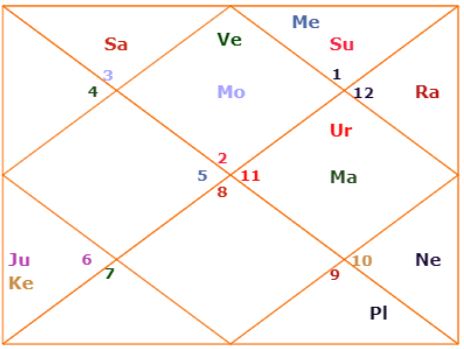
Vedic Astrology is practiced in India and called Jyotish Shastra. In fact, Vedic astrology is a relatively recent term for it. It is a system of astrology based on Sidereal Astrology (Sidereal = stars). It is credited to Sage Parashara. As the term suggests, this system of astrology makes use of the constant background of the fixed stars, instead of relying on the Earth. Unlike Tropical astrology, it uses the measurements from the actual constellations in the sky. The sky is basically divided into different segments: –
- Division with respect to the constellations: The sky is divided into segments of 30° across the Ecliptic. The name of each segment is after the major constellation existing in the segment. Hence, there are 12 “zodiac” (Rashis) across the entire 360°.
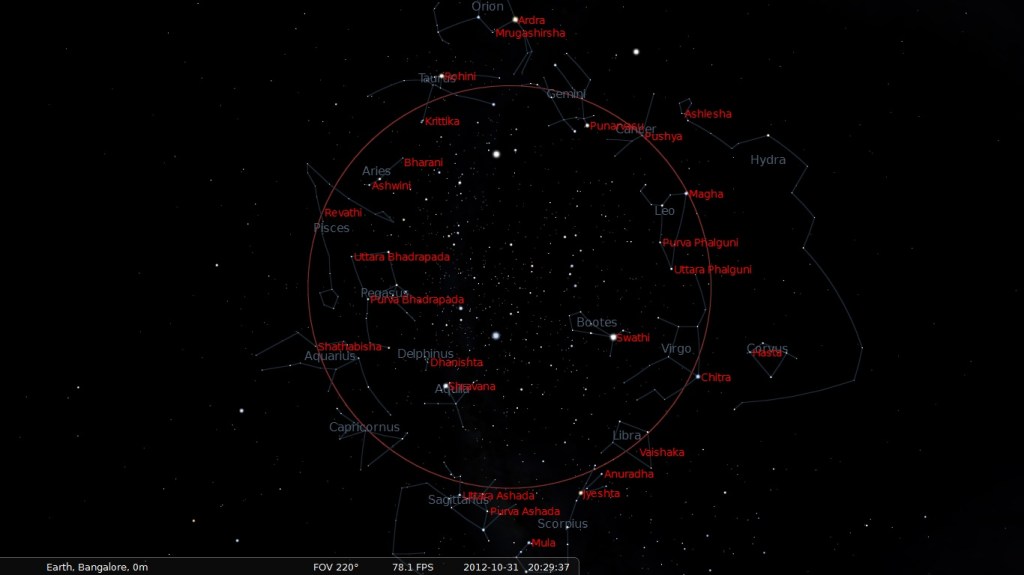
- Division with respect to the fixed stars (Nakshatras): Another division of the sky co-exists, which is done on the basis of 27 fixed stars called Nakshatras, each segment being of 13° 20′. Each segment is again named on the basis of the major star in that segment.
This ensures that the “Precession of the Equinoxes” is taken into account by taking a reference point which is fixed. Hence, using this system the Sun is still rising on Aries as there is no effect of seasons on measurements. There is further effects of the five elements of time division (panchaang), planets (relative positions and degree), moon’s nodes and several other factors that are to be considered. The entire set of calculations are performed on the basis of a lunisolar calendar, which is a combined lunar and solar calendar. There is much more to Jyotish Shastra than I could fit into a few paragraphs here.
Finally…
Predictive astrology is the section of astrology that makes predictions on one’s life, situation, community, place or time based on the precise calculations made using the study conducted on all factors that were mentioned above.
An interesting fact to note is that studies done on DNA samples obtained from skeletal remains of the ancient Mesopotamian people by groups like that of Polish scientist Henryk Witas, revealed genetic link between them and the Indian subcontinent. It suggests the ancestry of communities in Mesopotamia is via migrants or merchants from the Indian subcontinent, who spread through Eurasia thereafter. The rulers right after Sumerians were the Babylonians who adopted their language, culture and literature. As I noted earlier, Babylonians are credited for the inception of western astrology. Is Indian astrology to be credited for inspiring Babylonian astrology? Hard to say, but easy to suspect. Point to ponder?
Get inspired! Get mystified! Get detoxified! Get Priya-fied!
Both systems of astrology are co-existing in the present world and each has its takers. Although, there are still some questions that need to be answered. Why are only selective stars and constellations studied and why not the others? Why are stars used as a background reference when the Universe itself is moving? Why would the stars effect my life when they exist so many light years away? What about the scientific validation tests already conducted on astrology and its methods? I will address these questions and more in my upcoming articles. Stay tuned!
Cover image credits – © Meghan (schooledbyscience.com)
Discover more from Priyafied
Subscribe to get the latest posts sent to your email.

 Priyafied
No faults absolutely spot on. Keep up the good work. Stay blessed
On Sun, 26 Jul, 2020, 6:40 pm Get satisfied, Get detoxified, Get mystified, Get Priya-fied…., wrote:
> R Priya posted: ” Astronomy and Astrology are two fields cut from the same > cloth, but ended up being worn by different people. They started alike, and > down the line somehow let go of each other. As a result, astronomy gained a > reputable status, and astrology ran down into” >
LikeLiked by 1 person
Thank you Appa 😊
LikeLike
I completely agree with ur views that astronomy and astrology are brothers from same mother. But unfortunately, today people relate astrology with superstition and astronomy with science. I believe if someone really wants to know the secrets of universe then he must have go through both the fields bcz both are based on mathematics nd both are equally important. And I think stars affect our life bcz we all are connected with the 4 natural forces specially EM and gravitational nd the two most important thing of this universe Energy and Mass…but I will wait for ur new article to Know the reason…Keep writing….all the best👍🤗
LikeLiked by 1 person
Yes Preeti. I will soon post the next article in the series. Thank you for giving me a new outlook on this subject 😊
LikeLike