


Podcast of this article: –
Debunking has become the trend of the present times I suppose. Everyone is debunking something or the other in their respective industries. Well, I am not debunking any industry here. However, I am debunking the “modern”, “scientific” minds whose approach to science is purely impractical. It is imperative to understand that viewpoints are subjective, facts are not. The reason I put the words “modern” and “scientific” in quotes is because these words seem to have lost their original intended meaning. It seems like even the meaning of these words have become subjective. And that is not good.
Tradition
I am sure the title was confusing. You aren’t sure whether I want to give you proof of the scientific Indian way of living, or, I want to iterate that the Indian “science” is unscientific. And you are burning with curiosity which side I fall on, so that you can condition your opinion accordingly. I totally understand, as this kind of impatient curiosity has been instilled into our systems with the advent of the world of internet.
I am on neither side, and at the same time I am on both sides. I do not follow everything that Indians of my community believe in, at the same time, I still do many things that are valid and believed in my community. And I don’t stick to only my community. In short, this just implies that I use my brain to weigh the belief on a logical scale and then follow it. I am restating this fact (which I have already made clear in many of my previous articles; do check them out!), because a very disturbing notion has taken over Indians in the last 50 years that anything Indian will be strange and outdated, and anything that is borrowed from developed nations is progressive. Most people are guilty of this belief, however much they refute my point, which I can prove by simple examples:
- It is very ridiculous when “modern” people living in civilized societies portray the word “tradition” as synonymous with regressive and oppressive.
- People in villages are living in a retrogressive atmosphere that makes them have less common sense than those living in cities with modern facilities.
- Following your traditions is oppressive, but having parents who only tell you what you want to hear is progressive.
- Someone ordering Shikanji at a fine dining restaurant is laughable in front of someone ordering Virgin Mojito, despite both being more or less the same thing with different names.
I can go on and on with this list but you do get the point (I hope). It is a very wrong notion that if my parents believe in something that does not suit me, they are conservative. And if they support me in what I am doing, they are progressive and new-age parents, without consideration of whether what I am doing is right or wrong.
This does not always mean what they say is the ultimate truth. This goes for parents as well as children. Evaluate any and all your activities, decisions and morals using the brain that you are born with. The problem arises when every innocent question of a small child on everyday activities like praying, is shut down by their parents by saying that anything of faith is to be believed, not questioned. Why so? The child has every right to question, and it is the parents’ responsibility to come up with the right answer. Just to be clear here, “God will punish you”, and its derivatives do not count as the right answer.
This brings me to the intention of my article. The child does not get answers and loses interest in the “traditions”. Eventually they grow up without explanation and as grown ups believe that following those “traditions” is regressive as they don’t have explanations. As parents, it is your duty to make your child understand what you know with a rational mind, and as a child, it is your duty is understand what your parents tell you and then rationalize it in your mind. Unfortunately, common sense isn’t very common after all. And over time, all “Indian” things became regressive to a point that being traditional is embarrassing.
This has now become a trending point for everyone, where it is cool to flaunt breaking traditions. The line between breaking traditions and breaking away from traditions has blurred to the point that there is no difference between them these days. But there is a huge distinction between both. One breaks away from a tradition after contemplation of pros and cons. But one breaks a tradition to fit into the latest modernization trend of appearing cool. But is it?
Recently, I read an article that had a title along the lines of “Strange traditions in India”. On reading the complete article, I realized it was doing the same thing that many others are doing. It took some completely valid points, gave the observation and gave a completely wrong derivation from it. I will mention one of the points here. It said that “married women in the west wear rings on their finger, while in India, married women wear toe rings which is strange but true”. Now this got me thinking that it is true but is it strange? No. Not at all. It is different. Because traditions are different in the west and in India. And I don’t even have to talk of other countries further east of us, because it will only hurt the “liberal thinkers” more. Something done differently in the west is progressive, and something done differently in India is regressive. This is precisely the broad classification going around since quite a few years, which is actually very sad.
Science
Science is not averse to tradition, and neither is tradition averse to science. Science is something that has been part of Indian way of living ever since Indians have been living. I feel that the problem lies in the definition of tradition. The official definition of tradition is given as “a belief, principle, or way of acting that people in a particular society or group have continued to follow for a long time, or all of these beliefs, etc. in a particular society or group.” Going by this definition, I do not see where it says that following traditions is anywhere close to retrogressive, or that traditions are unscientific. In fact it has no mention of science. Science is a method, tradition is a way of living. So why are we comparing apples to oranges.
Sure enough, you incorporate changes in your lifestyle as science makes progress, and changes in your way of living are the traditions you then pass on to your children. This does not make you conservative. What makes you conservative and tyrannical is refusing to change trivial things with times. Coming back to science, a simple google search on science in ancient India shows a plethora of results giving out a very clear message that science was highly developed in ancient India with mathematicians and scientists like Baudhayan, Aryabhatta, Bhaskaracharya, Kanad, Varahmihira and so on.
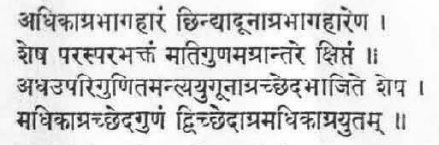
- Aryabhatta, a mathematician of the fifth century, gave the idea of zero to the world, which is the basis of any and every calculation possible. Apart from that, in his scholarly work Aryabhattiya, he gave the crucial and major concepts of number theory, decimal numbers, trigonometry, algebra and geometry. In fact, two major sections of his work are devoted to astronomy, known as Khagol Shastra at that time.
- Brahmagupta and Bhaskaracharya in their works Brahm Sputa Siddantika and Siddanta Shiromani introduced operations on zero, negative numbers, arithmetic, algebra as well as solving algebraic equations.
- Kanad, a sixth century scientist, introduced the atomic theory, which compares precisely with the modern atomic theory.
- Varahmihira made major contributions to hydrology, geology and ecology. In fact, his scholarly work Brhat Samhita focuses on the earthquake cloud theory and tries to relate earthquakes to plants, underwater activities, underground water, unusual cloud formations, animal behavior etc.
- Susruta, a pioneer in the field of surgery, has given a description of over 1100 diseases and 760 medicinal plants in Susruta Samhita. It also contains groundbreaking research on Rhinoplasty and Ophthalmic surgery, as well as description of over 101 surgical instruments.
- Charak, considered as the father of Indian medicinal science, contributed immensely in the field of medicines in his work Charak Samhita, which talks of digestion, metabolism, immunity and fundamentals of Genetics.
I haven’t even scratched the surface yet. There are many many more scientists, mathematicians and scholars who have shaped science and mathematics much better than we know it today. Sure enough we may rediscover them eventually with modern scientists from all over the world, but is it fair on our own ancient scientists, who dedicated their lives to give us science?
In fact, Aryabhatta and Varahmihira made exemplary contributions to Astrology, which is the science of prediction based on Astronomy. All the knowledge and development that originated from the Vedas have been given a form known to us in these modern times by so many great ancient Indian scientists and scholars. Despite having all these resources as well as the capability to understand them, Indians are embarrassed to be Indians. This is what misinterpretation of “modernization” has got Indians to.
Is it worth adopting this type of modernization, or is it time to embrace the actual science? Debunking impractical “scientific” explanations just to pull down our own amazing ancestry is nothing but self-destruction.
Point to ponder? Get inspired! Get detoxified! Get satisfied! Get Priya-fied!
Discover more from Priyafied
Subscribe to get the latest posts sent to your email.

 Priyafied
Valid points to ponder for the younger generation. Keep writing. 🙂
LikeLike
Points to ponder for all generations 😅
LikeLike
Quite impressive article. Keep it up.
LikeLiked by 1 person
Thank you
LikeLike
You make valid points Priya- cultivating a questioning mind to inquire into perceptions including our own is a prerequisite to realizing the truth.
LikeLiked by 1 person
Thank you Vijay Bhaiya
LikeLike
Excellent ,your thoughts on the topic properly presented, keep writing📝✍️. Stay blessed and take care.
On Fri, 10 Jul, 2020, 11:19 pm Get satisfied, Get detoxified, Get mystified, Get Priya-fied…., wrote:
> R Priya posted: ” Debunking has become the trend of the present times I > suppose. Everyone is debunking something or the other in their respective > industries. Well, I am not debunking any industry here. However, I am > debunking the “modern”, “scientific” minds whose approac” >
LikeLiked by 1 person
Thank you appaa 😌
LikeLike