

Almost everyone has fear of something. The object of fear varies from physical, perspective to emotional. The degree of fear also varies from natural fears to irrational fears or phobias.
It is completely natural to experience fear in life-threatening situations. That is a completely human response to fear a genuine danger. But it is very important to know whether that fear is natural fear or a phobia.
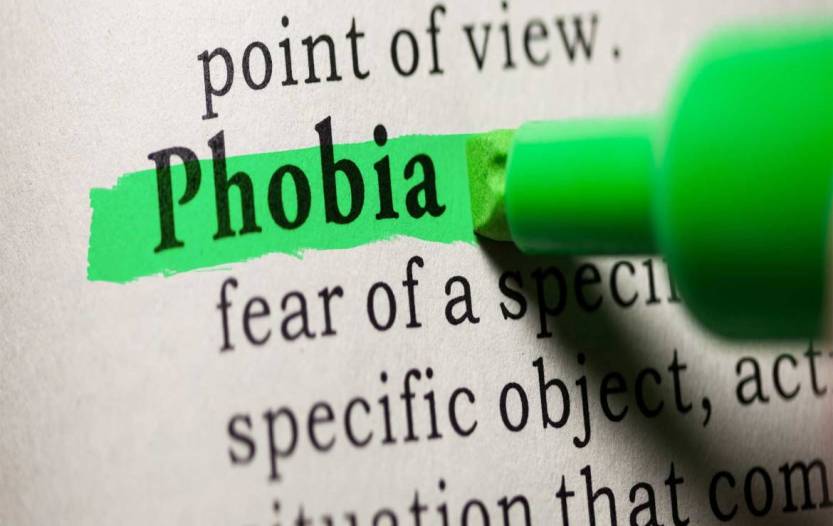
Phobia is an irrational fear. Such a fear is persistent. In this case, a person will take special steps to completely steer clear of the object or situation. And if such a situation or encounter seems unavoidable, the person may be seen to have extreme reactions, including distress, fainting or panic attacks.
So it is important to know what is the degree of “fear” that you have.
I can take an example at this point. I personally, am afraid of dogs. Yes I am. To all the dog lovers, this is not an implication of saying that I don’t like dogs. I just fear them. It is imperative for anyone to be afraid, at least for a moment, of a snarling Doberman, but it is an irrational fear to be afraid of a friendly poodle on a leash. That is what I am. In this situation, I take extreme steps to steer clear of situations that may lead to any confrontation with dogs. I avoid places, routes, parks wherein there are chances of any dog encounters.
Such a phobia comes under Specific Phobias. It is such an excessive and unreasonable fear that even an anticipation of an encounter causes distress. Other than animal type, environmental type, situational type and injury type specific phobias also exist. Let me make this clear here, that injury type phobia is a phobia only when you avoid any treatments or injections because you’re terrified of needles and it does not constitute feeling queasy while giving a blood test.
Agoraphobia is also something many people are seen to have. It ranges from panic attacks due to being in an unfamiliar area, fear of contamination, to PTSD, due to any traumatic incident that may have occurred. Such conditions may lead to a person being at a higher risk of self harm, increased fight or flight response, and may last for much more than a month after the incident.
Social phobias are also common where people constantly anxious about people judging them, which leads to extreme steps taken by the person to steer clear of public interaction.
Our reaction when faced with the object of fear determines whether it is a fear or phobia. Also, it is not necessary that such phobias exist since childhood. They may develop in childhood, and have an equal likelihood to develop in adulthood. Only when it starts interfering in the daily life and routine of a person, it can be termed as a phobia.
After decoding our fears, now what? There has to be a solution to the all these problems. Yes, there are many ways to get over such conditions.
Cognitive Behavioral Therapy is a common therapy undertaken which focuses on making the person realize that their fear is irrational by making them mindful of their own thoughts. This has been proven to have a very good success ratio. A systematic desensitization is another method followed, where a continuous exposure to the object or situation of fear will make the person accustomed to it and eventually overcome it. Hypnotherapy or medications are also options of therapy.
So as I said, there are many routes to recovery. Some of them may work for some people, but they may not work for others. So, solutions are relative from person to person. But there is a solution to everything.
Personally, I am trying every bit to get over my phobia of dogs. I fare forward with the belief that I shall succeed at some point in life.
Overcoming phobias as a whole is a very time consuming process and may take years to happen. But there must be a start to everything, only then will it end. Point to ponder?
Get detoxified, Get Priya-fied!
Discover more from Priyafied
Subscribe to get the latest posts sent to your email.

 Priyafied